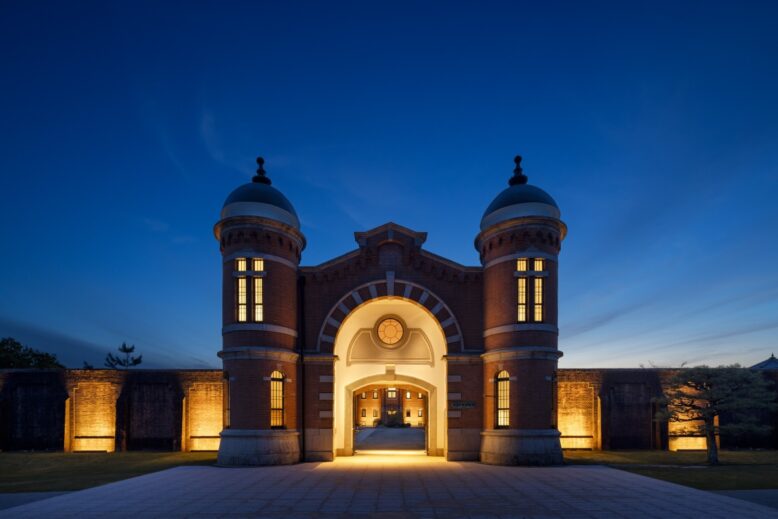

KAI Kusatsu Luxury Ryokan
On 7 June 2026, Hoshino Resorts opened KAI Kusatsu, giving Kusatsu Onsen a new reason to add an extra night either side of the snow.
KAI Kusatsu is the latest opening from KAI, Hoshino Resorts’ onsen ryokan brand, and part of its “30 Onsen Ryokans, 30 Onsen Cultures” mission to have 30 properties open by the end of the decade. It sits in the town of Kusatsu, Gunma Prefecture, home to one of Japan’s Three Famous Hot Springs and one of the country’s largest natural flows of hot spring water, around 32,000 litres a minute pouring straight off Mount Kusatsu-Shirane.
The ryokan blends the formality of a traditional inn with the comforts most Kiwi travellers appreciate on a snow holiday: comfortable beds, modern bathrooms, and a location close enough to the town’s own baths and eateries that you’re never stuck out on your own.
Why Kusatsu
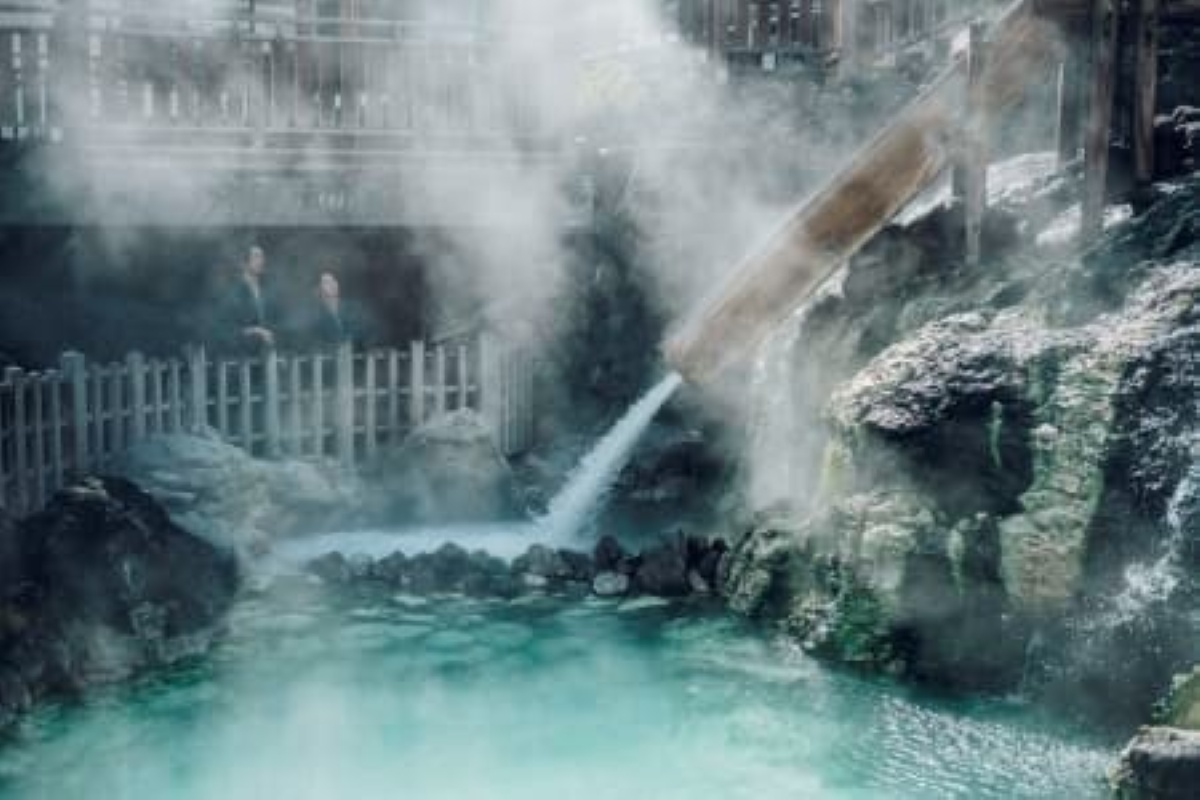
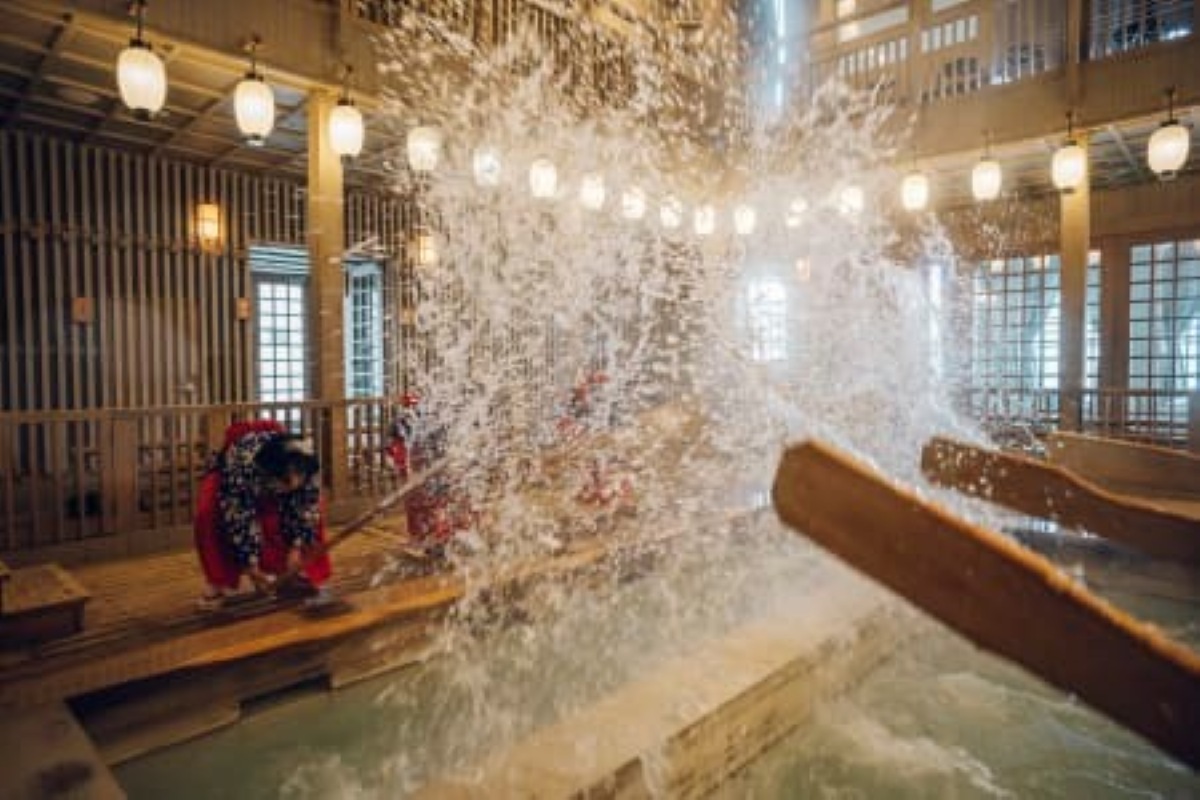
It’s this natural abundance of hot spring water pouring straight off Mount Kusatsu-Shirane that gives Kusatsu more public and private bathhouses than almost anywhere else in Japan. The spring water here is sulphur-rich and naturally low in pH, a mineral mix said to help with skin toning and exfoliation, and to support circulation and metabolism.
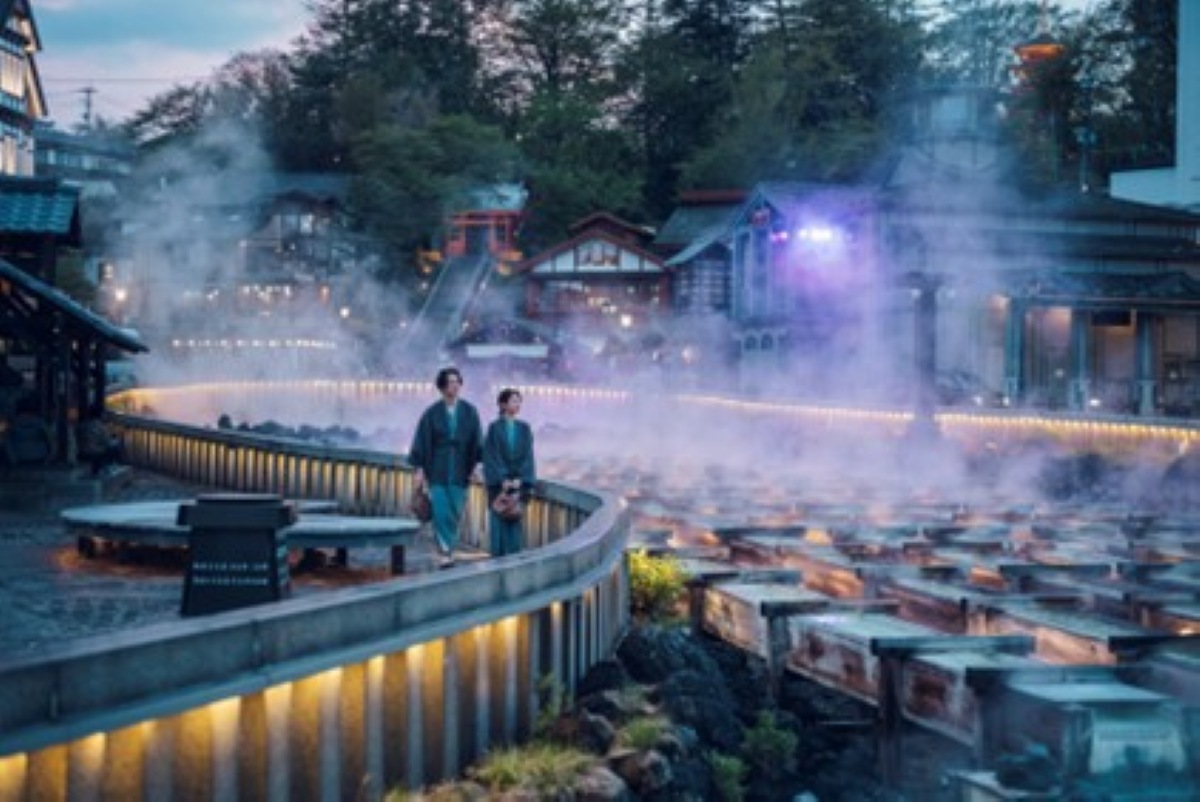
None of this is new. Kusatsu has been a hot spring destination since the Edo period, and its reputation runs deep enough that it’s been celebrated in Japanese song for generations, described as having “a thousand houses of Kusatsu” built in the traditional Edo style. At the centre of it all is the Yubatake, the hot spring field that’s remained the town’s heart since the Edo era, with bathhouses, inns and shops lining the paths leading to it ever since.
The town itself still rewards wandering rather than driving. It’s compact enough to cover on foot, and an evening spent moving between baths in a yukata is just what a night in Kusatsu looks like, for locals and guests alike.
Inside KAI Kusatsu
KAI Kusatsu has 94 rooms, each sleeping between one and four guests, which keeps the scale closer to a real ryokan than a hotel styled to look like one. Eighteen of those rooms come with their own private open-air bath, for guests who’d rather soak on their own terrace than work around the shared bathhouse hours.
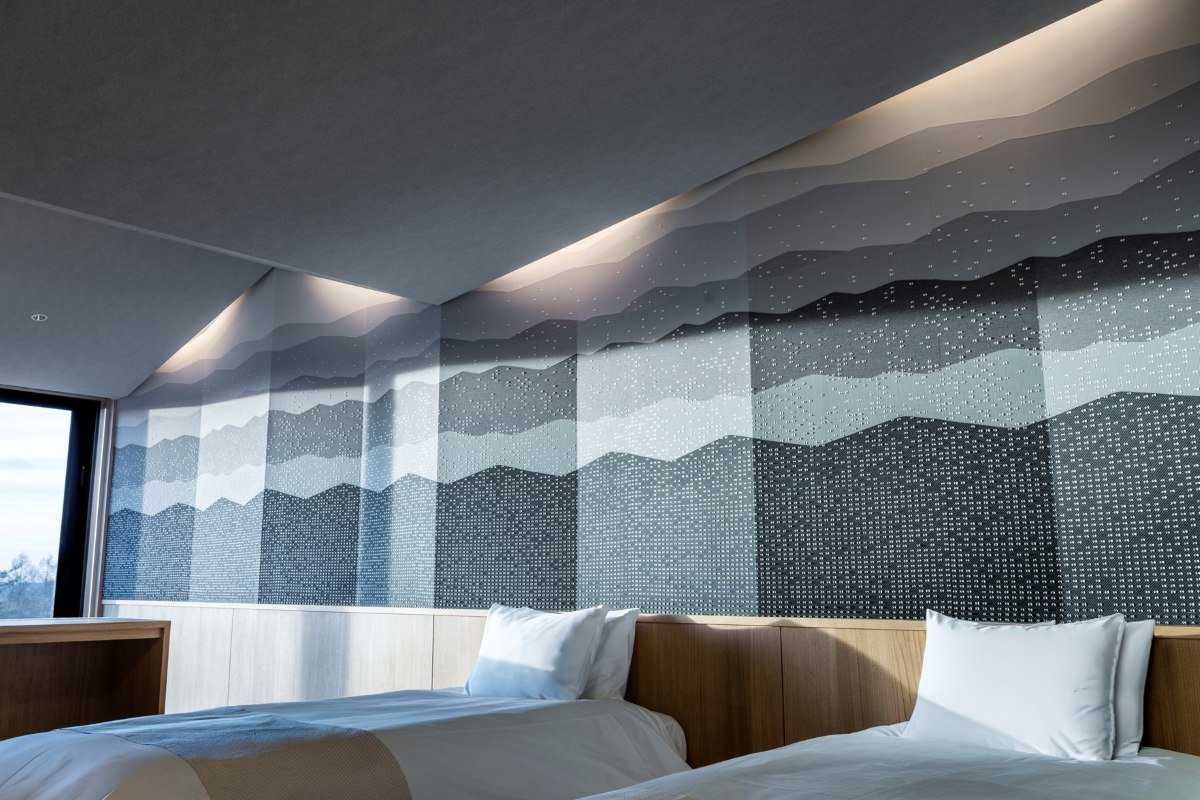
The signature rooms are the Silk Art Rooms, built around Gunma’s history as one of Japan’s great silk-producing regions. Textile artist Reiko Sudo designed them using traditional Kiryu weaving techniques, and the effect is tactile: silk lampshades, custom cushions, and bed runners patterned on alpine flora, all built around a wall of handcrafted silk art studded with glossy thread.
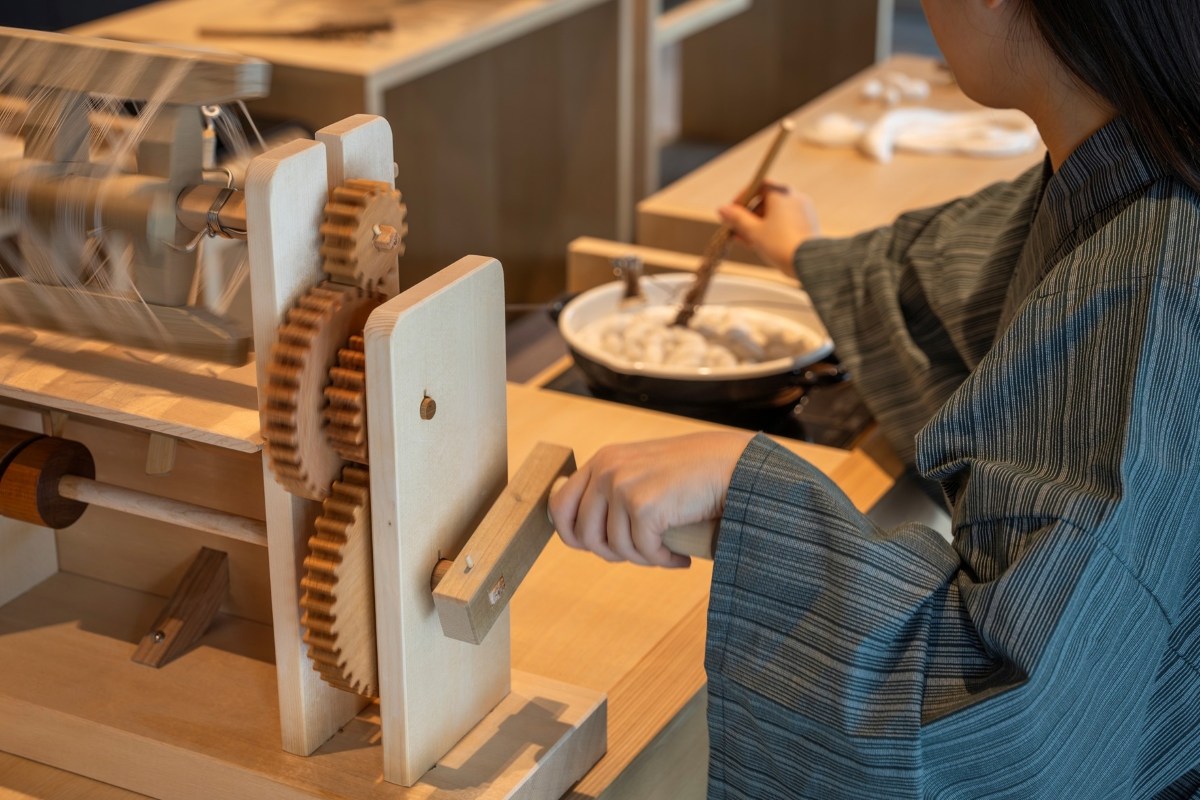
That silk connection isn’t just decorative. Guests can take part in the Joshu Zaguri Silk Spinning Experience, a free activity held in a building modelled on the Tomioka Silk Mill, a UNESCO World Heritage Site not far from here. Using traditional zaguri hand tools, a technique that dates back to the Edo Period, guests spool silk thread straight from the cocoon and finish with a small souvenir tassel to take home.
The Onsen and the Fireplace Lounge
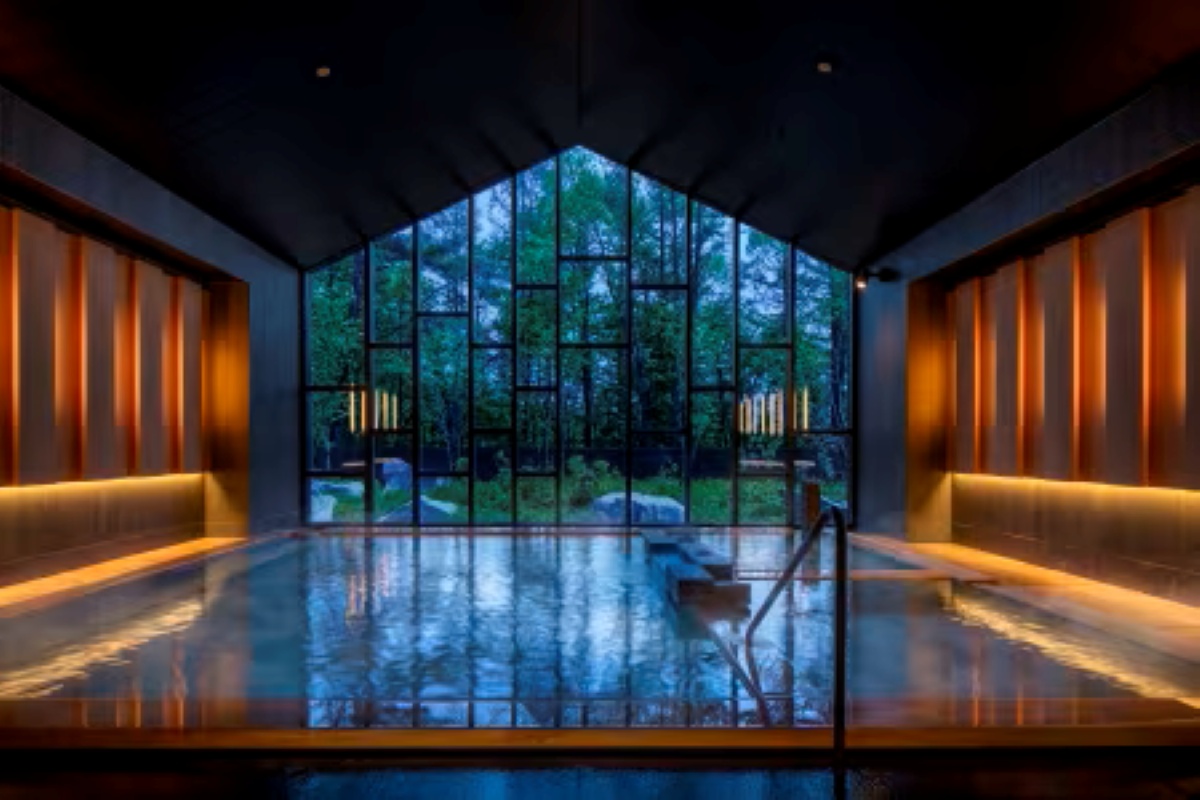
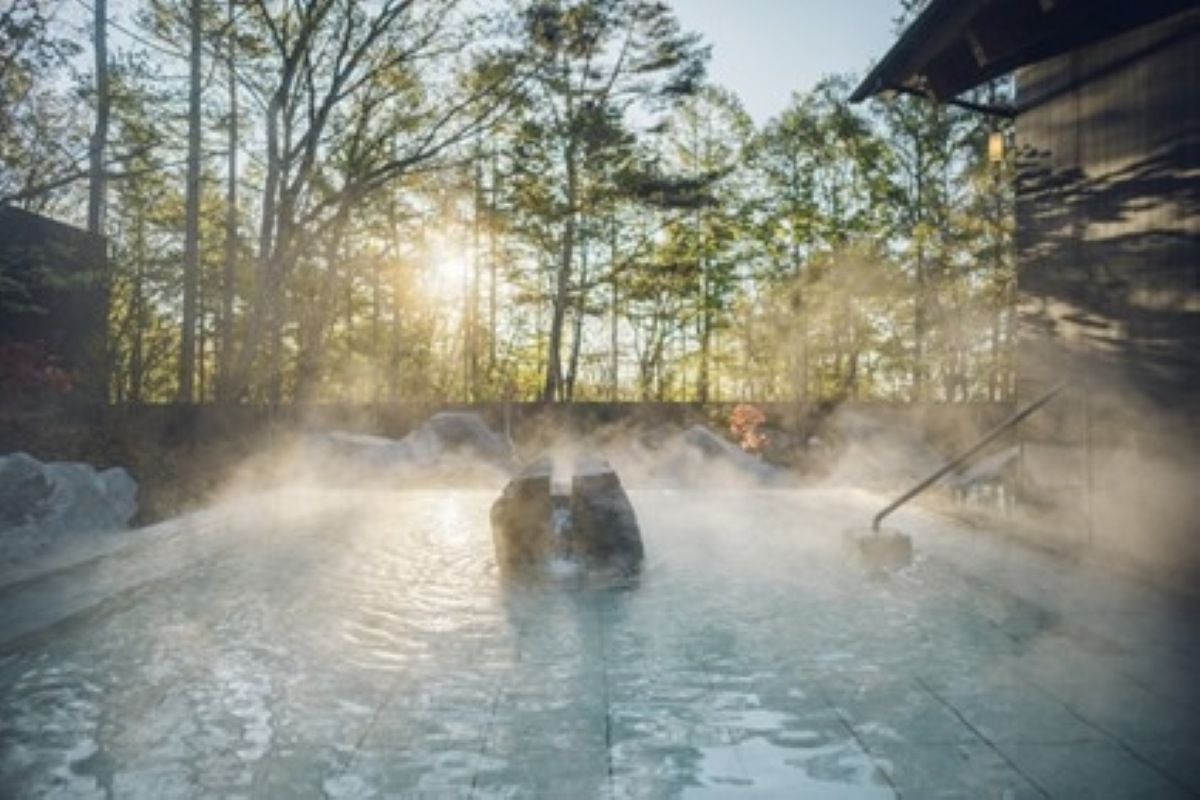
The bathhouse draws from two separate springs, and the difference between them is the whole point. The Bandaiko Source runs hot, acidic and fast, among the highest-volume, highest-temperature springs anywhere in the region. The Nishinogawara Source is rarer and milder, used by only a handful of facilities in the whole town. KAI Kusatsu is one of the few places where you can move between both in a single visit, across three separate tubs set at different temperatures.
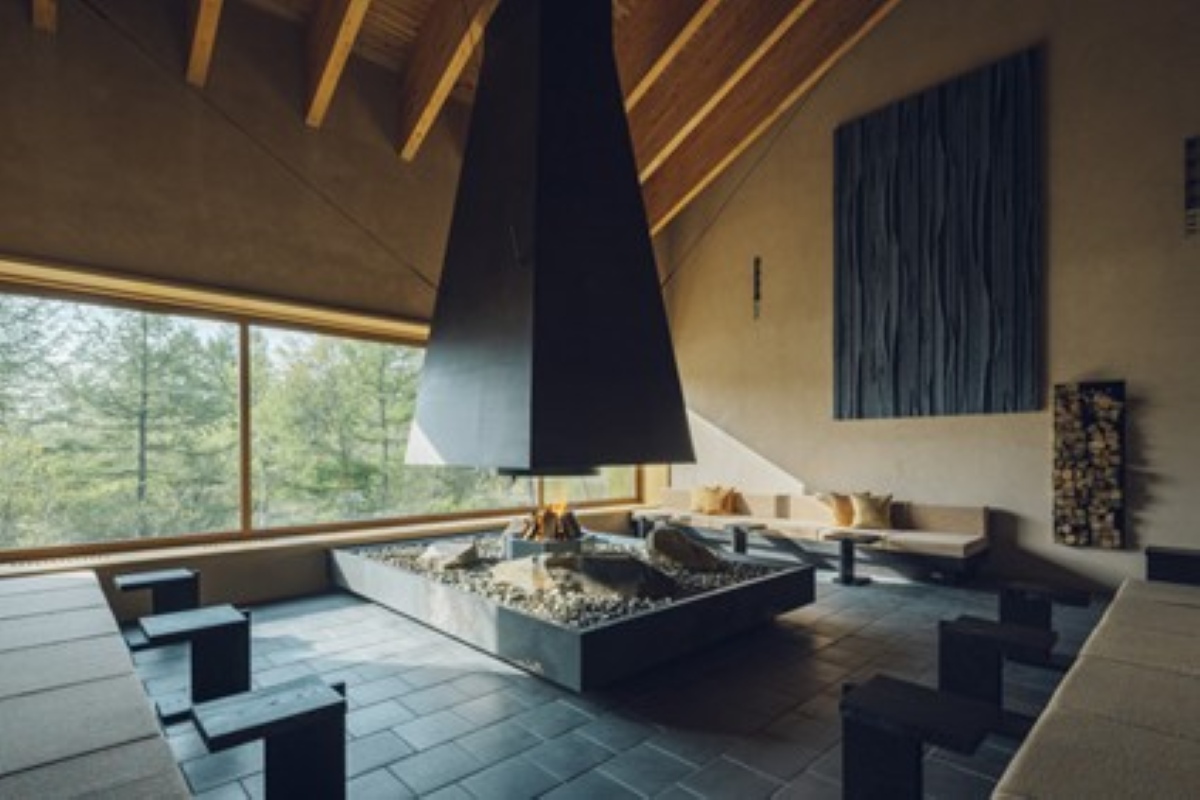
Afterwards, the Fireplace Lounge is where the evening slows down. It’s split into four distinct zones around a central wood fire, so there’s a spot whether you want to sit near the crackle or well back from it. It doubles as a Travel Library, stocked with books on Gunma and Kusatsu’s culture and landscape, worth a browse if you’re not quite ready to head back to the room.
The Tunnel to Town
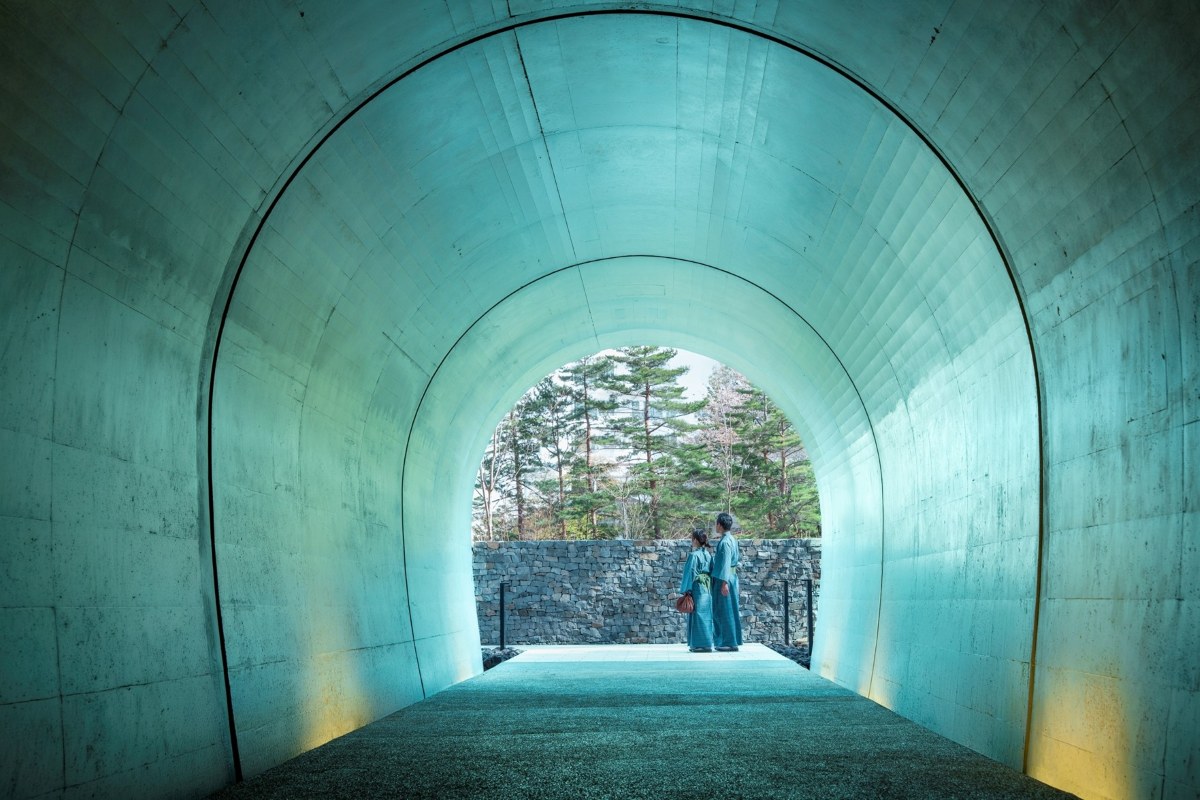
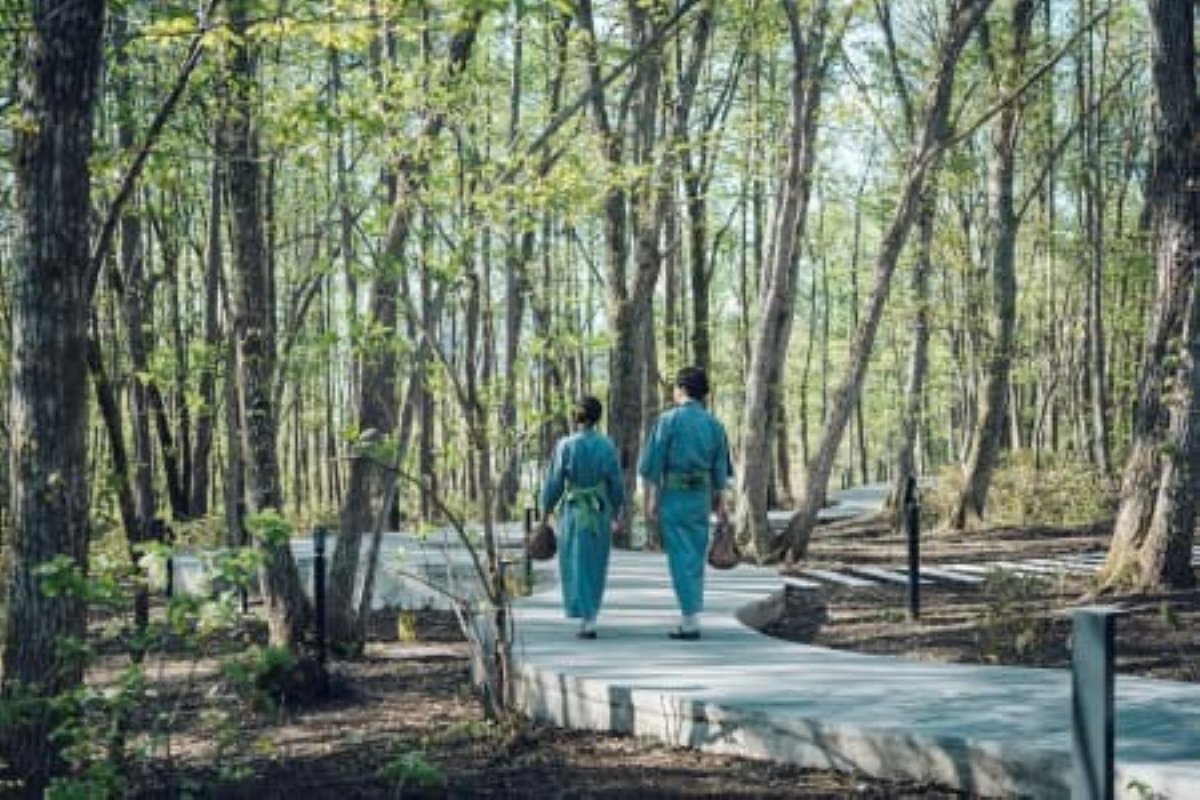
KAI Kusatsu sits on a quiet plateau above the noise, but it’s built around a single, deliberate idea: a private tunnel, for guests only, that connects the ryokan to Kusatsu Onsen town. You walk a short forest path to reach it, then it’s about a five-minute walk from the tunnel exit into the hot spring town itself.
It means you get both sides of Kusatsu without choosing between them. Quiet and forest on one side of the tunnel, the town’s shops, eateries and public bathhouses a short stroll away on the other, all without needing a car or a taxi to switch between them.
Guests can also pick up the Town-Strolling Kit, a furoshiki bag holding a Three-Bath Strolling Pass for three of Kusatsu’s most well-known public baths, plus a guide to the town written by KAI’s own staff. It’s built for exactly the kind of evening Kusatsu does best: yukata on, wander through the tunnel, and see where the town takes you.
Dining at KAI Kusatsu
Dinner comes down to two choices, and they’re different enough that picking one over the other changes the evening.
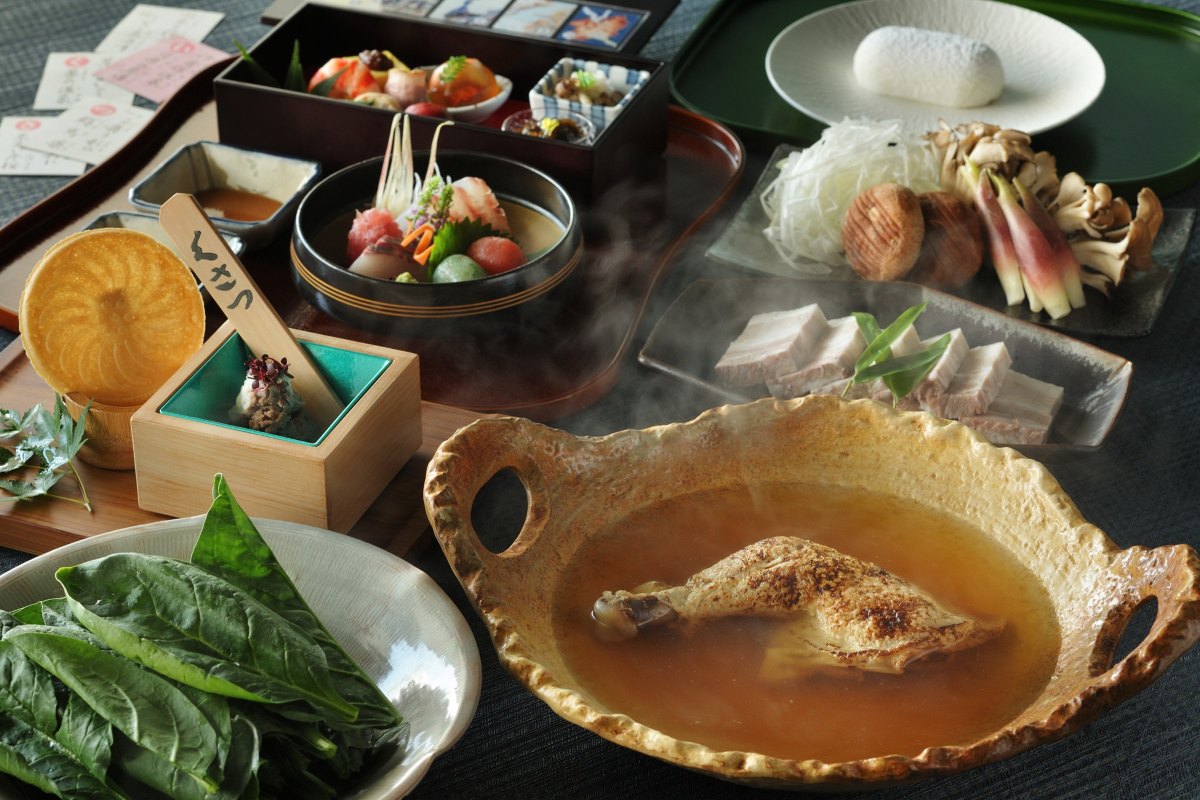
The Joshu Hoden Kaiseki runs in the main restaurant, in a semi-private setting built around Gunma’s seasonal produce. It opens with a dish inspired by the Yubatake and by yumomi, the traditional method locals use to cool the town’s hot spring water down to bathing temperature without diluting it with cold water. The signature main is Joshu Joyo Nabe, a hot pot of whole simmered chicken thigh and local Gunma spinach in a savoury broth.
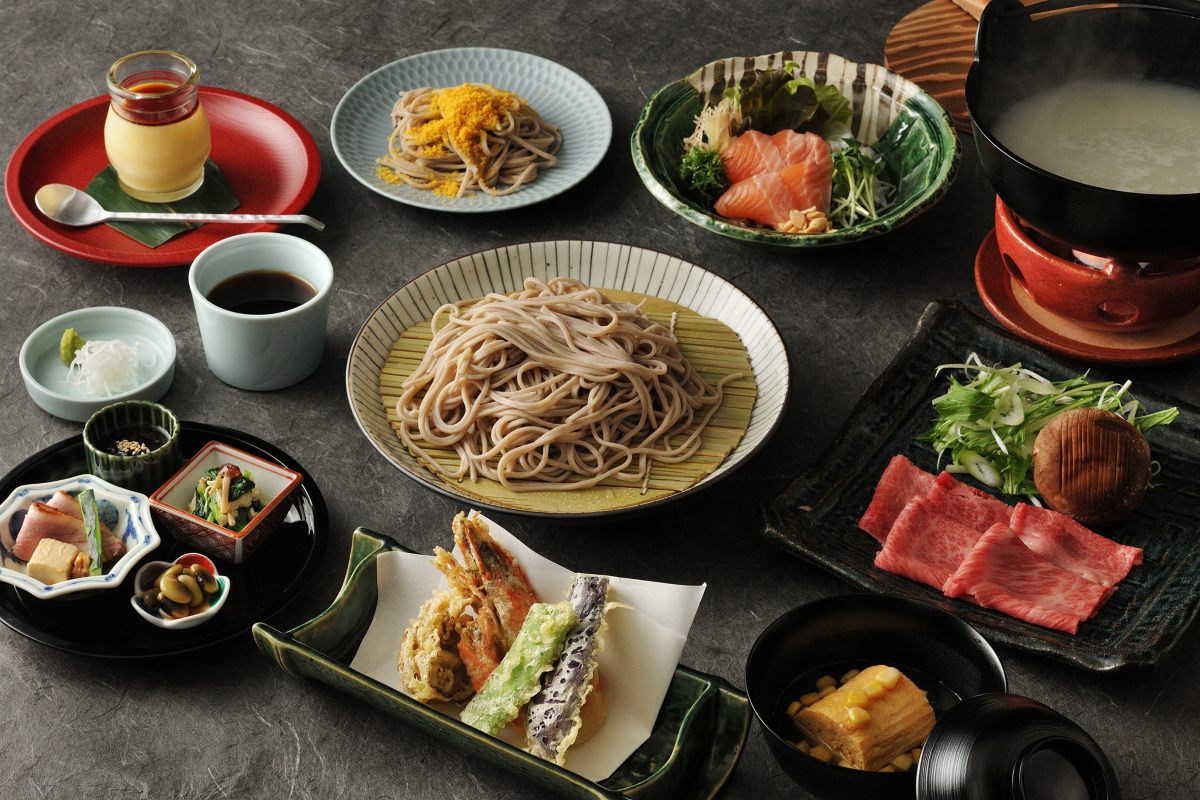
The alternative is the Tejiko Nama-ko-uchi Soba Kaiseki, served at Soba Kappo SAI, a new restaurant on the property and the first KAI venue anywhere to open its doors to day visitors as well as guests staying overnight. The soba here is 100% buckwheat, made from locally sourced flour, and served with a three-stage dipping broth built from bonito, kelp and dried shiitake. The restaurant sits on the edge of Nishinogawara Park, so there’s a proper view of the greenery while you eat. Local sake, regional craft beer and natural wine round it out.
Guests aren’t locked into either option for the whole stay. The tunnel means a night in town for dinner is just as easy as staying on site.
A Day at KAI Kusatsu
A stay here runs on its own rhythm, less a checklist of things to do, more a slow unwind stretched across a couple of days.
Mornings start early and gently, with KAI’s own guided exercise session before a full sit-down breakfast. Late morning is for the town itself, through the tunnel and back, with time built in for a wander through the bathhouses or a spot of lunch. Early afternoon usually settles into the Fireplace Lounge, and the Joshu Zaguri silk-spinning session tends to sit mid-afternoon too, timed so it doesn’t compete with the baths or the town.
Dinner comes earlier than most Kiwi travellers might expect, generally by 6pm, and that’s deliberate. It leaves the rest of the evening free for a long soak, more time by the fire, and a guided breathing session before bed. A cup of ginger tea and an early night follow, and the next morning starts with another soak before breakfast, and the cycle begins again.
It’s built for two or three nights rather than one, long enough to settle into the pace rather than just pass through it.
Where This Fits on Your Snow Holiday
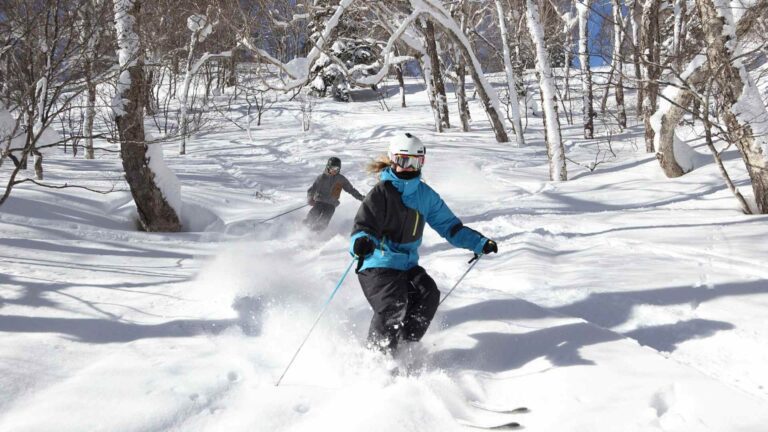
Kusatsu isn’t a ski town, but it’s clearly built with skiers in mind. KAI Kusatsu has ski lockers on site, a small detail that says a lot about who Hoshino Resorts expects to walk through the door.
Kusatsu sits in Gunma, and the direct mountain road linking it to the Nagano ski resorts, the Shiga-Kusatsu Kogen Route, closes for the entire winter, typically mid-November to late April. So this isn’t a quick pairing with your ski day. During the season, getting here from Shiga Kogen, Nozawa Onsen, Madarao or Myoko means the longer way round via Nagano city, roughly two and a half to two hours fifty minutes by car depending which resort you’re coming from.
That’s not a knock against it. It just means KAI Kusatsu works best as its own dedicated stop, tacked onto the front or back of a longer Nagano snow holiday, rather than something you nip out to on a rest day. Build in a night or two either side of the skiing, and the transfer stops feeling like a detour and starts feeling like the point.
There’s a neat logic to where it sits, too. KAI Kusatsu is about an hour from Karuizawa Station, which puts you on the Hokuriku Shinkansen and roughly an hour from Tokyo. That makes it a sensible way to end a trip, last few days on the mountain, a night or two unwinding at Kusatsu, then a fast run into Tokyo for the flight home, rather than squeezing in one more transfer on travel day.
Thinking about adding KAI Kusatsu to your Snow Holiday? Get in touch with the AMPED team, and we’ll build it in for you.