
Inside KAI Miyajima, Facing the Floating Torii Gate
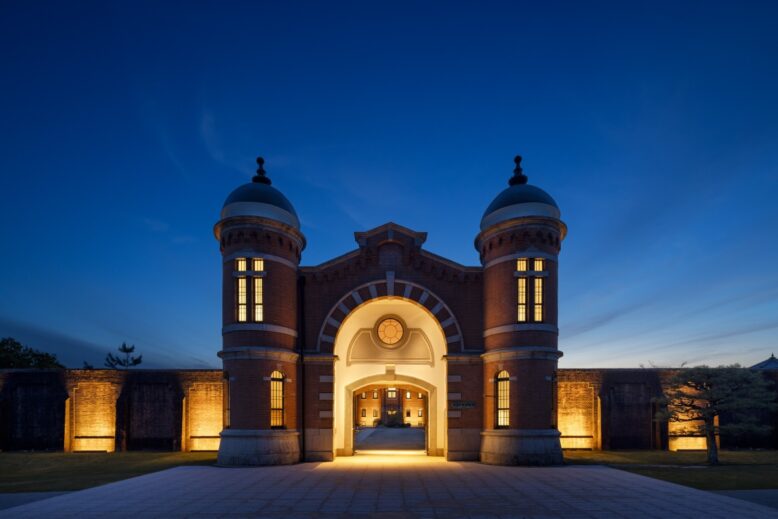
Hoshino Resorts has just opened its first hotel in Hiroshima Prefecture, and it’s chosen a genuinely striking spot to do it. KAI Miyajima sits right on the Seto Inland Sea, directly across the water from Miyajima Island and its famous floating torii gate, welcoming its first guests from 23 July 2026. It’s the latest step in KAI’s “30 Onsen Ryokans, 30 Onsen Cultures” mission, a goal of 30 distinct properties by the end of the decade, each one built around its own region rather than a repeated template.
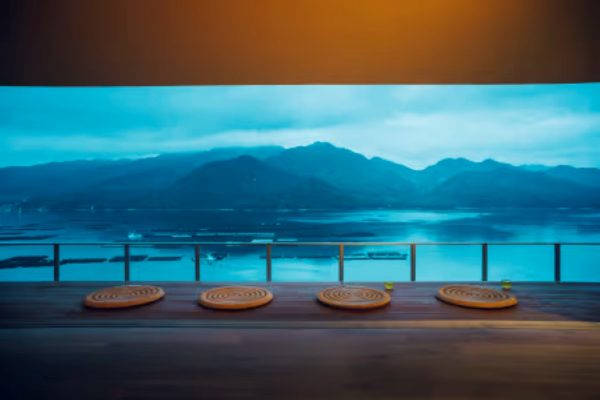
Every one of the 54 rooms is a KAI Signature Room, more than half with their own private open-air onsen, and the hotel’s rooftop bath hall is designed so its outdoor pools appear to blend straight into the sea below. There’s a recreated ancient stone sauna, a Heian-period dance performed nightly, and a kaiseki dinner built around Hiroshima’s own food culture, playful and genuinely regional rather than a generic luxury ryokan template.
It also turns out to be a hotel that fits naturally into a longer Japan snow holiday, not as an obvious stop, but a genuine option for travellers extending their trip beyond the mountains.
What Are the Rooms and Onsen Like at KAI Miyajima?
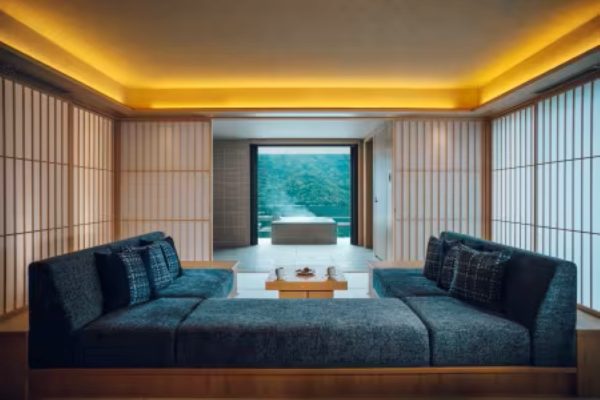
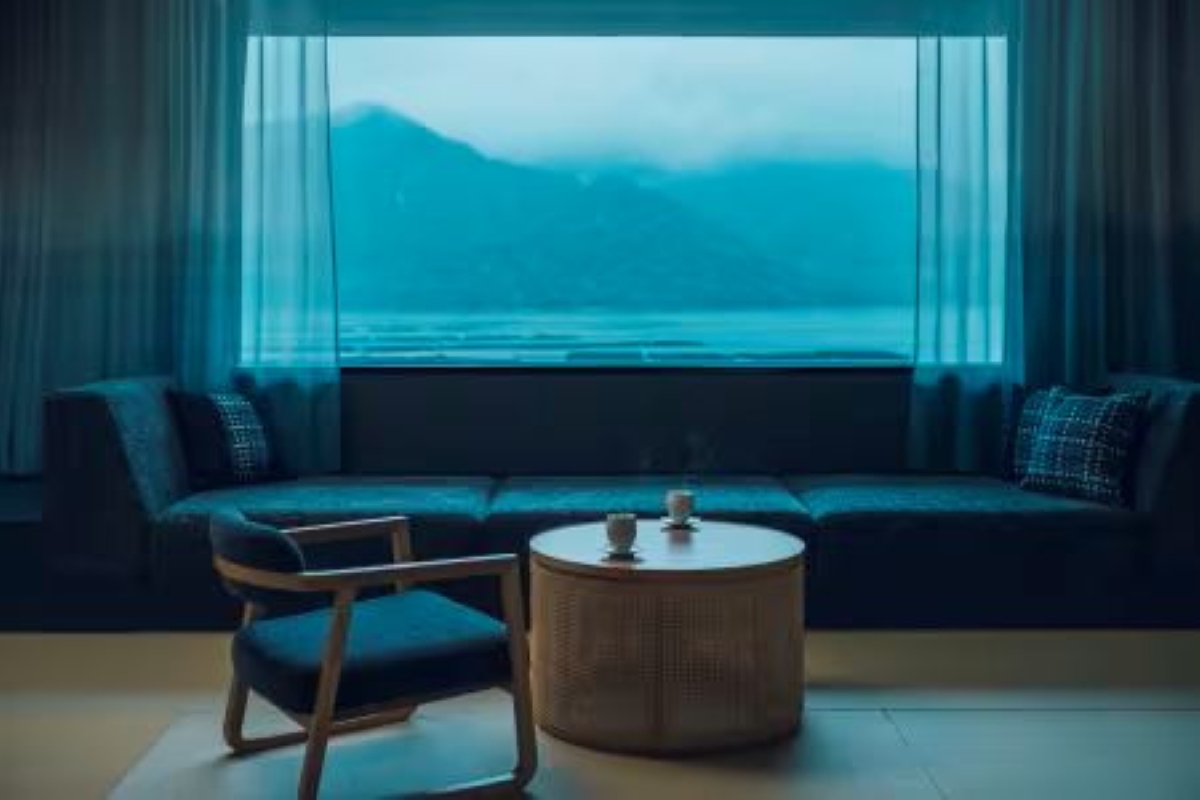
All 54 rooms are KAI Signature Rooms, named Umigiri, or Sea Mist Rooms, and more than half come with their own private open-air onsen. Tatami covers every floor, so it’s a bare-feet-only kind of stay throughout. The design leans into the setting rather than generic luxury, gradated blue curtains meant to evoke the sea mist rolling in off the Inland Sea, cushions in Fukuyama denim, and light shades made from aji glass, incorporating powder from Kagawa Prefecture’s high-grade aji stone. Four Special Rooms go further again, 100 square metres with a separate main living area and uninterrupted sea views.
The hotel’s water comes from Miyajimaguchi Onsen, a genuinely rare, mineral-rich hot spring with reported therapeutic benefits for conditions like gout and rheumatoid arthritis. The rooftop bath hall makes the most of it: outdoor baths designed so they visually blend straight into the sea, and separate indoor hot and mild baths looking out over the mountains behind the hotel instead, both open to every guest.
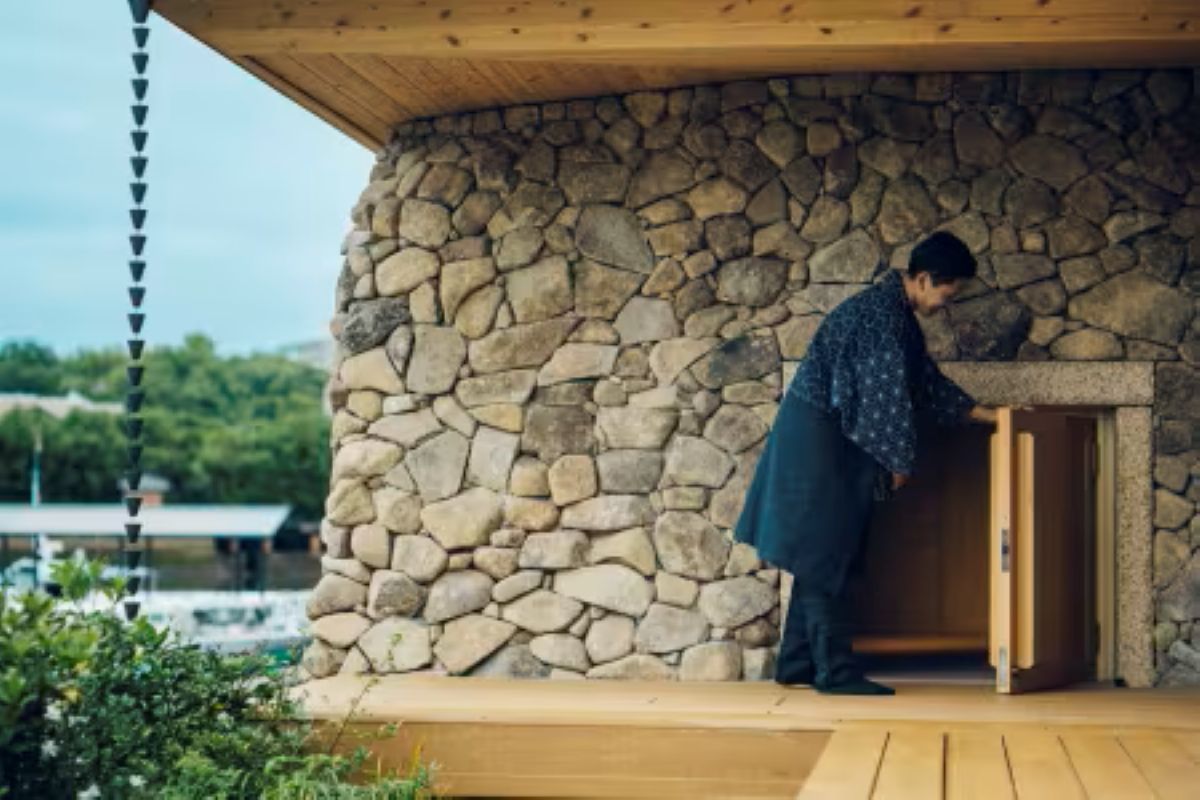
For something more unusual, there’s the Setouchi Ancient Sauna, a recreation of a stone bathing tradition specific to this region, built from archaeological research and historical records rather than a modern reinterpretation. It’s reservation-only and restricted to guests 12 and older, positioned as close to the sea as any spot on the property.
What’s the Food and Evening Entertainment Like?
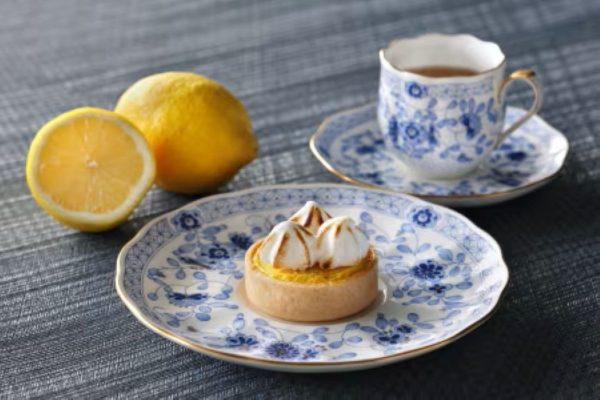
Dinner runs across two seatings, 5:30pm or 7:30pm, and it plays with Hiroshima’s food culture rather than just referencing it. A Western-style lemon and shrimp mousse appetiser sits alongside Suigun-nabe, a hot pot associated with the historic Murakami Suigun pirates, prepared with octopus and conger eel. Dining happens in semi-private rooms or at counter seating looking out over Miyajima and the sea, and both vegetarian kaiseki and children’s menus, split by age group for 4 to 6 and 7 to 11 year olds, are available with advance notice.
Breakfast runs 7am to 9am, a Japanese-style set built around local ingredients, including hiroshimakko-jiru, a soup regional locals grow up on, served in a vessel shaped like a traditional Miyajima rice scoop, one of the island’s best-known crafts. A Western breakfast option is available too, except from 1st to 3rd January, when it’s off the menu entirely.
In the evenings, KAI Miyajima runs its own version of the brand’s KAI Cultural Discovery programme: a nightly performance of the Shirabyoshi Dance, a Heian-period tradition of song and dance performed in tribute to Itsukushima Shrine’s origins. It’s free, open to all ages, and needs no reservation, genuinely accessible rather than a paid add-on experience.

What Does a Typical Stay at KAI Miyajima Look Like?
KAI Miyajima runs on a gentle, unhurried rhythm, and it’s genuinely consistent with what we found at KAI Kusatsu, if you haven’t read that piece, it’s worth a look at how differently the same brand philosophy plays out at a mountain onsen town versus this seaside setting. Check-in leads straight into an onsen soak, then time to unwind in the Yuagari lounge, a dedicated space specifically for settling in after a bath, before dinner in the evening and the nightly Shirabyoshi Dance performance. The day winds down with breathing exercises and a cup of ginger tea before sleep.
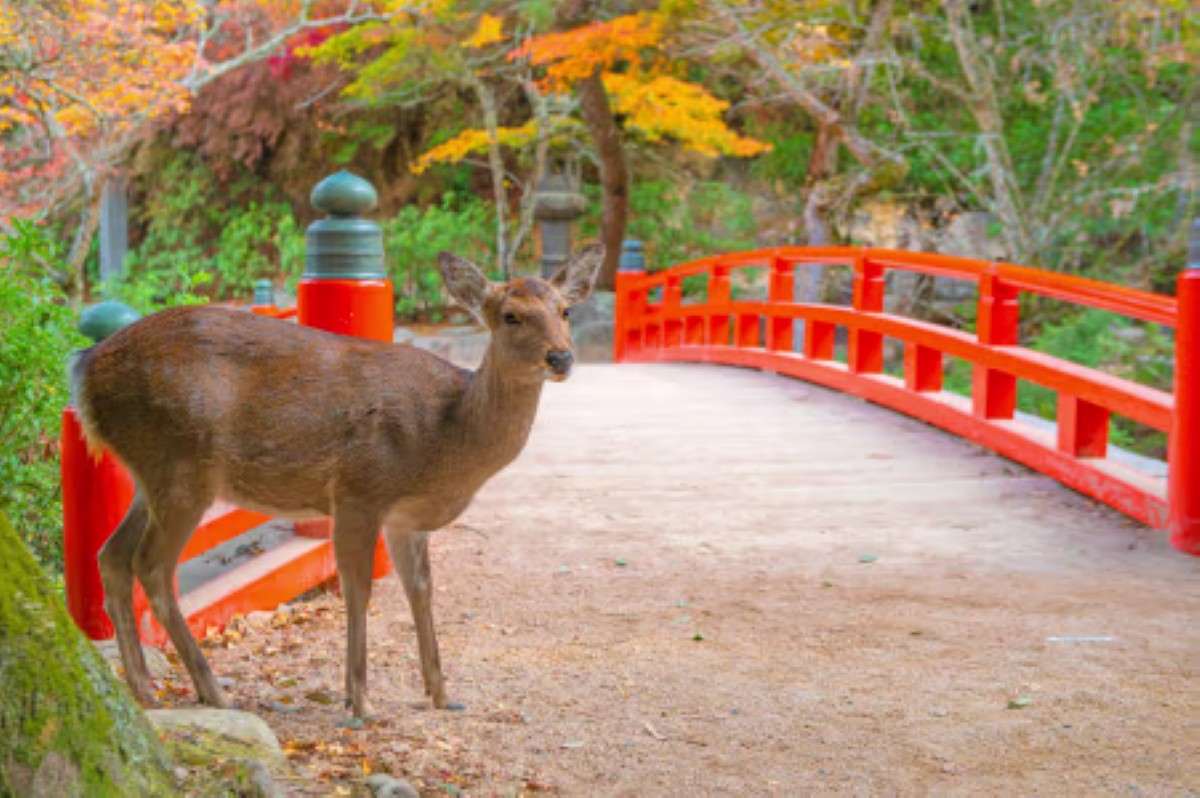
Mornings start with KAI Original Exercise, a gentle wake-up routine before breakfast. The middle of a stay is where the Miyajima ferry crossing naturally sits, a mid-morning window heading across to the island. It’s worth knowing what’s actually over there before you go: wild deer wander freely around the shrine and the main street, Omotesando, though unlike Nara’s, these deer must not be fed. For something more active, the Miyajima Ropeway climbs partway up Mount Misen, the island’s highest point, with Daisho-in Temple at its base. Momiji manju (maple-leaf shaped cakes) and fresh Miyajima oysters are the two things worth trying before heading back for a rest and another onsen soak ahead of dinner.
On departure day, there’s time for one more morning bath and a browse through the on-site souvenir shop before check-out. It’s less a checklist of things to do and more a rhythm the whole stay follows, onsen, rest, dinner, culture, repeat, with Miyajima Island slotted naturally into the middle rather than treated as a separate excursion.
Who Is KAI Miyajima Right For?
This is a genuinely different kind of KAI stay to Nara. Pets are allowed, kids’ menus are split by age group, and room occupancy runs up to six guests, so families are properly catered for here in a way they simply aren’t at some of Hoshino’s other properties. The one exception is the Setouchi Ancient Sauna, reserved for guests 12 and older, so younger children miss that specific experience even if everything else on the property welcomes them.
It also suits couples and anyone travelling for genuine rest rather than a packed sightseeing schedule. Between the private onsen, the unhurried daily rhythm, and a hot spring source with real, documented therapeutic properties, this leans toward slow mornings and long soaks rather than ticking off attractions. Miyajima Island is close enough to visit without it feeling like an excursion, but this isn’t a hotel built around getting out and exploring hard, it’s built around coming back to the onsen.
How Does KAI Miyajima Fit Into a Japan Snow Holiday?
Hiroshima isn’t on the way to any of Japan’s major ski regions, so this isn’t the kind of stop you’d pass through by accident. But if your trip already routes through the Kansai gateway, Osaka or Kansai Airport, the same entry point we’ve covered for Kyoto, Nara and onward travel to Hakuba or Niseko, extending further to Hiroshima is a genuinely realistic add-on rather than a stretch.
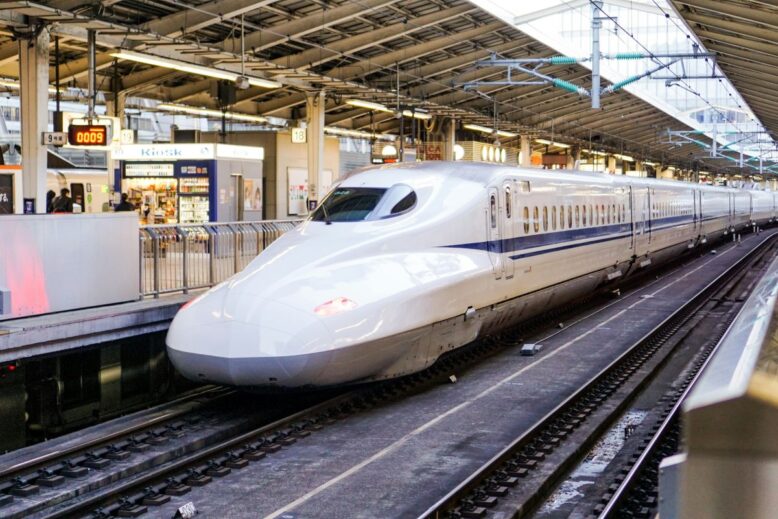
The fastest Shinkansen services get you from Shin-Osaka to Hiroshima in around 1.5 hours, with Miyajimaguchi itself roughly 2 hours from Shin-Osaka door to door. That makes a couple of nights at KAI Miyajima a workable bookend to a longer Japan itinerary, either before heading north into the mountains, or as a slower, coastal finish once the skiing’s done.
Let AMPED Build This Into Your Japan Trip
KAI Miyajima’s own booking terms state that reservations are only accepted from within Japan, so this genuinely isn’t one you can book directly from New Zealand yourself. That’s exactly the kind of thing we sort out as a matter of course, alongside working out where a stop like this actually fits in a longer itinerary, before or after the mountains, and how many nights actually make sense given everything else on the trip.
Get in touch with the AMPED team, and we’ll build KAI Miyajima into your next Japan snow holiday, wherever it makes sense to put it.