
Nara's 118-Year-Old Prison Is Now a Museum
Nara Prison shut its gates on its last inmate in 2017. In April 2026, the gates swung open again, this time for anyone curious about what freedom actually means.
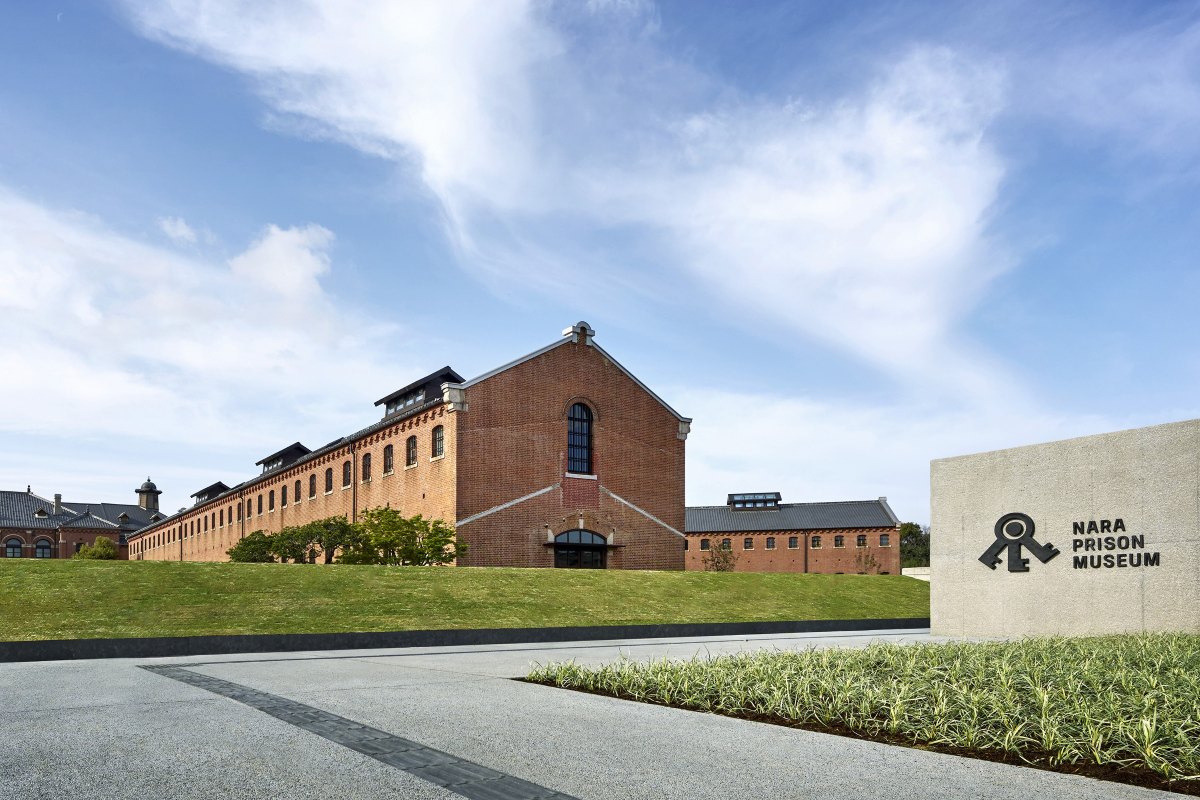
It’s called Nara Prison Museum, and it’s the first project of its kind for Hoshino Resorts, the operator behind some of Japan’s best-regarded hotel brands. They’ve taken one of the country’s most unusual heritage buildings and handed it to a proper curatorial team, not just a plaque and a paint job. The result is closer to a thoughtful art museum than a heritage tour.
Nara itself needs no introduction for most Japan-bound Kiwis. It’s an hour or so from Kyoto and Osaka, known for its bowing deer and the Great Buddha at Todaiji Temple. A former prison wasn’t on anyone’s Nara itinerary a year ago. It probably should be now.
How the Prison Was Built
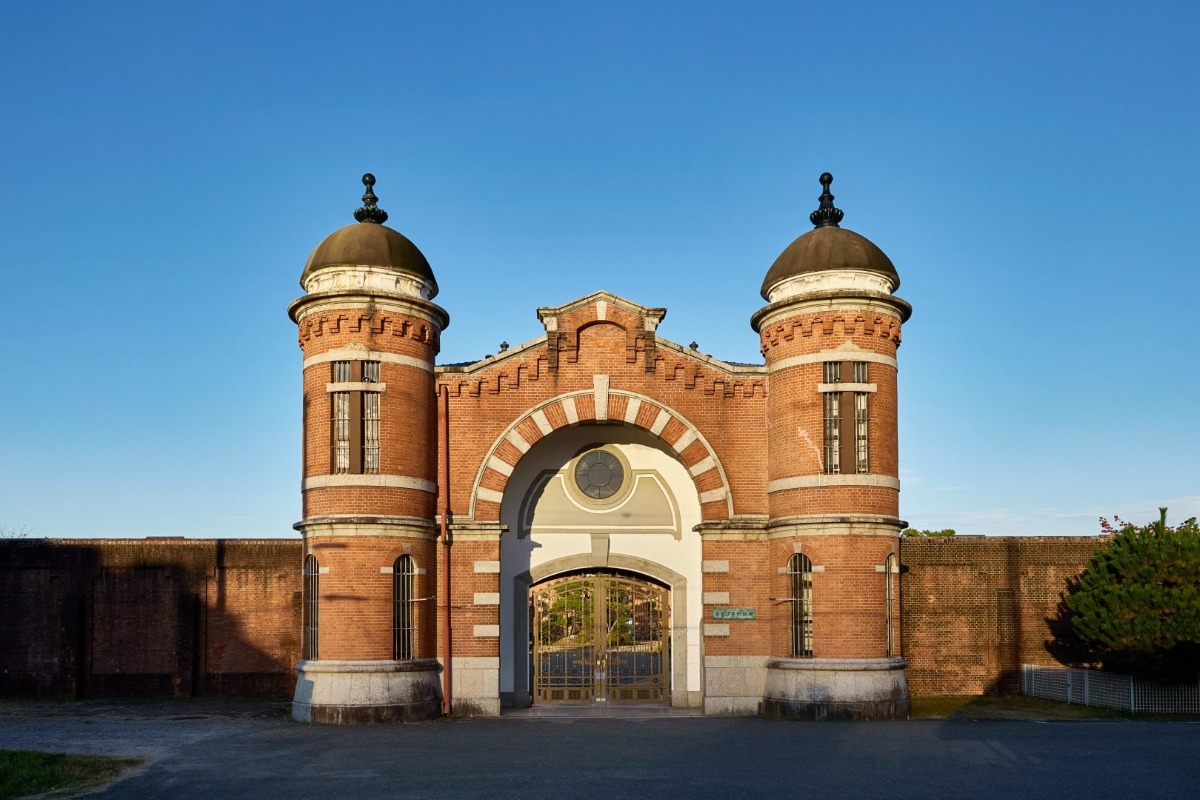
Nara’s connection to incarceration goes back further than you’d expect, to 1613, when the old Nara Magistrate’s Office ran a lock-up nearby. But the building visitors walk through today dates from a very different moment. Construction started in 1901 and finished in 1908, right as Japan was racing to look like a modern, constitutional state to the rest of the world.
That mattered more than it sounds. The Meiji government wanted foreign powers to see Japan’s justice system as civilised by Western standards, not a relic of the shogunate. So instead of building something purely punitive, it commissioned architect Keijiro Yamashita, born in 1867 as the old shogunate gave way to the new Meiji government, to design five new prisons that put rehabilitation and single-occupancy cells, a European import, ahead of the cramped, shared lock-ups of the Edo period: Nara, Nagasaki, Kanazawa, Chiba and Kagoshima, known as the Five Great Prisons. The point was made clearly enough that a model of Nara Prison was shown at the British-Japanese Exhibition in 1910, specifically to prove Japan could run a modern prison.
It worked almost too well. Built for 650 inmates, Nara Prison held 935 within two years of opening.
Nara is the only one of the five still standing in its original form, and it’s now recognised as an Important Cultural Property, Japan’s answer to a heritage listing.
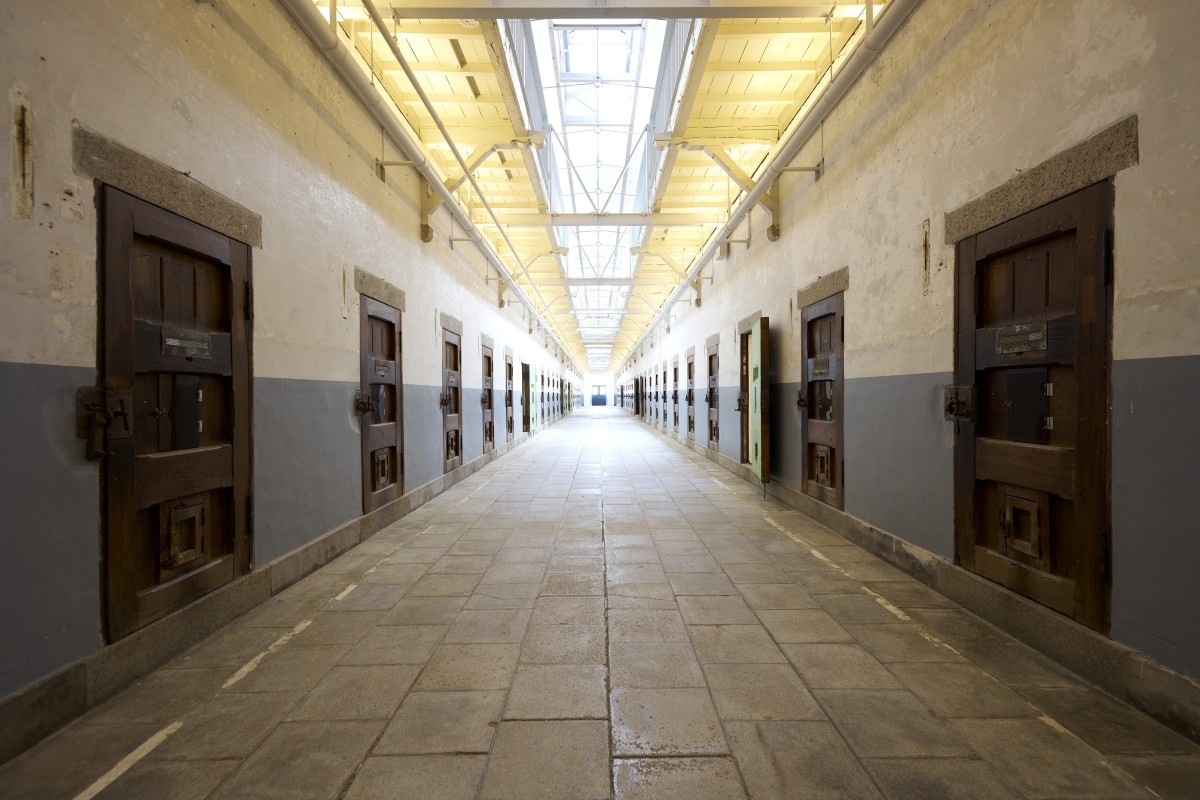
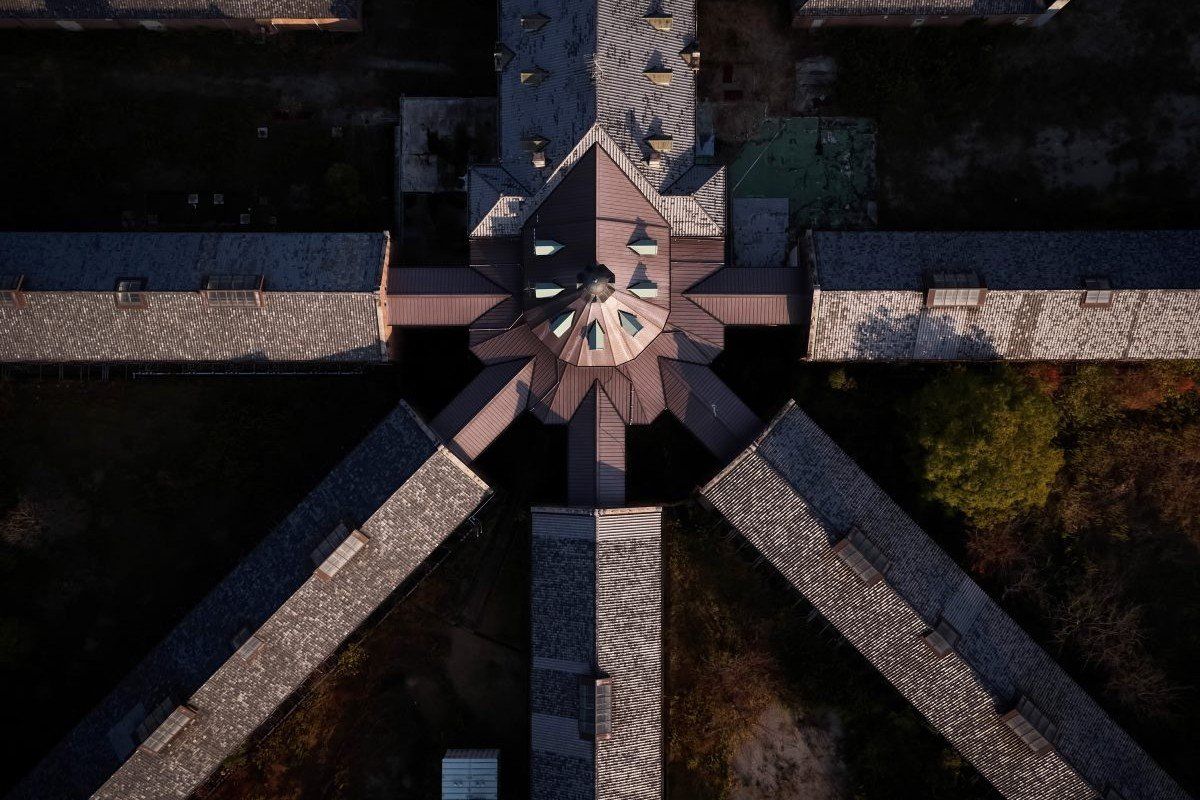
The building’s most striking feature is its layout. Cellblocks radiate outwards from a central guardroom, a design called the Haviland System after English architect John Haviland, who pioneered it in Western prisons in the early 1800s (his best-known example, Eastern State Penitentiary in Philadelphia, still stands too). The idea spread from Europe to North Africa, Australia and eventually Japan, letting a handful of guards watch every wing, and every floor, from one spot. Nara’s version held around 500 individual cells across five wards, each behind a solid wooden door with no interior handle. It didn’t need one.
One detail tends to stick with visitors: the red bricks making up those long, radiating corridors were laid by rival groups of inmates, who stamped their own logotypes into the bricks as they went.
In 1946 the prison was renamed Nara Juvenile Prison, reflecting a shift toward younger offenders that lasted the rest of its working life. Over the following decades it ran a correspondence high school course, a hairdressing training programme at its own barbershop, and a prisoner brass band, part of a rehabilitation push that the exhibition next door picks up in far more detail. It closed for good on 31 March 2017.
A Walk Through Nara Prison
The museum runs across three exhibition buildings plus a cafe and shop, and it’s built to be walked through in order.
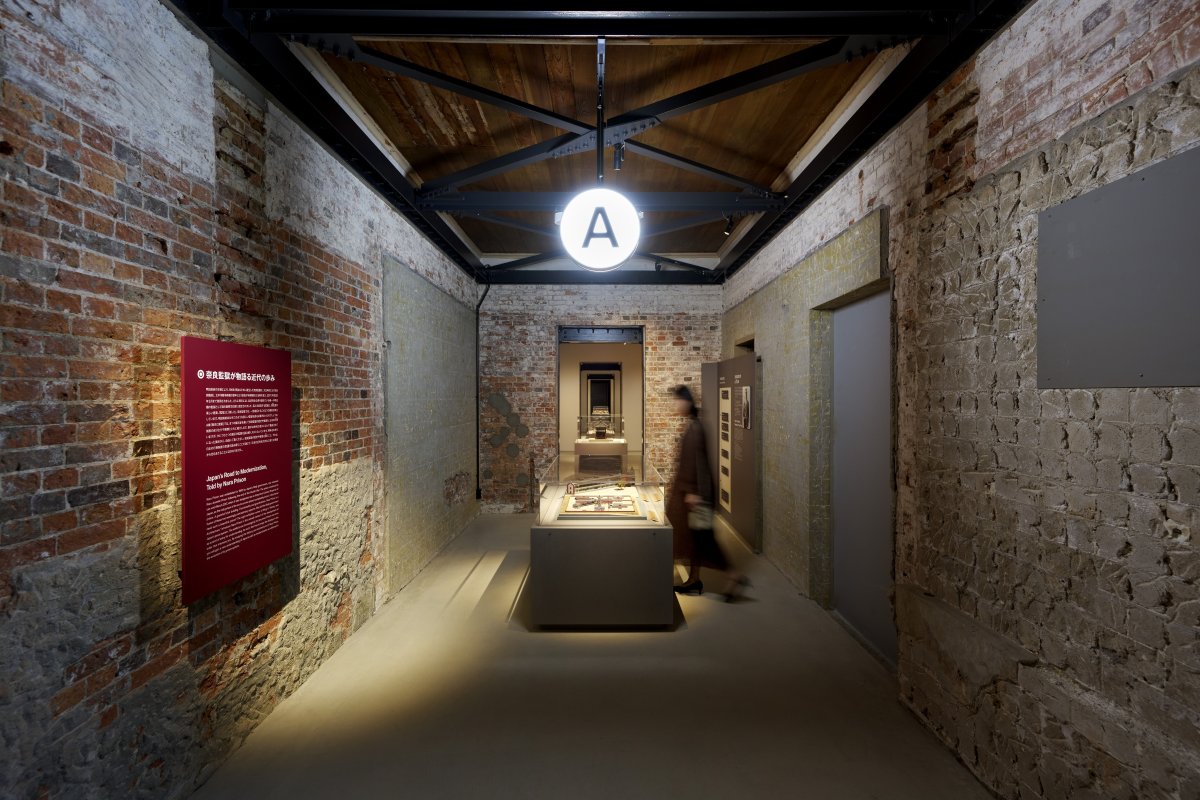
Building A picks up where the architecture leaves off, tracing the prison’s history and the vocational training and rehabilitation programmes that ran here through the Meiji era.
Building B is where the museum stops being a history lesson and starts making a point. It’s organised around seven themes of prison life: Discipline, Meals, Hygiene, Labour, Rehabilitation, Money and Freedom, each one laid out in enough detail that the rigidity of the regime is impossible to miss. It’s presented specifically to leave you thinking about what freedom actually costs, and who gets to keep hold of it.
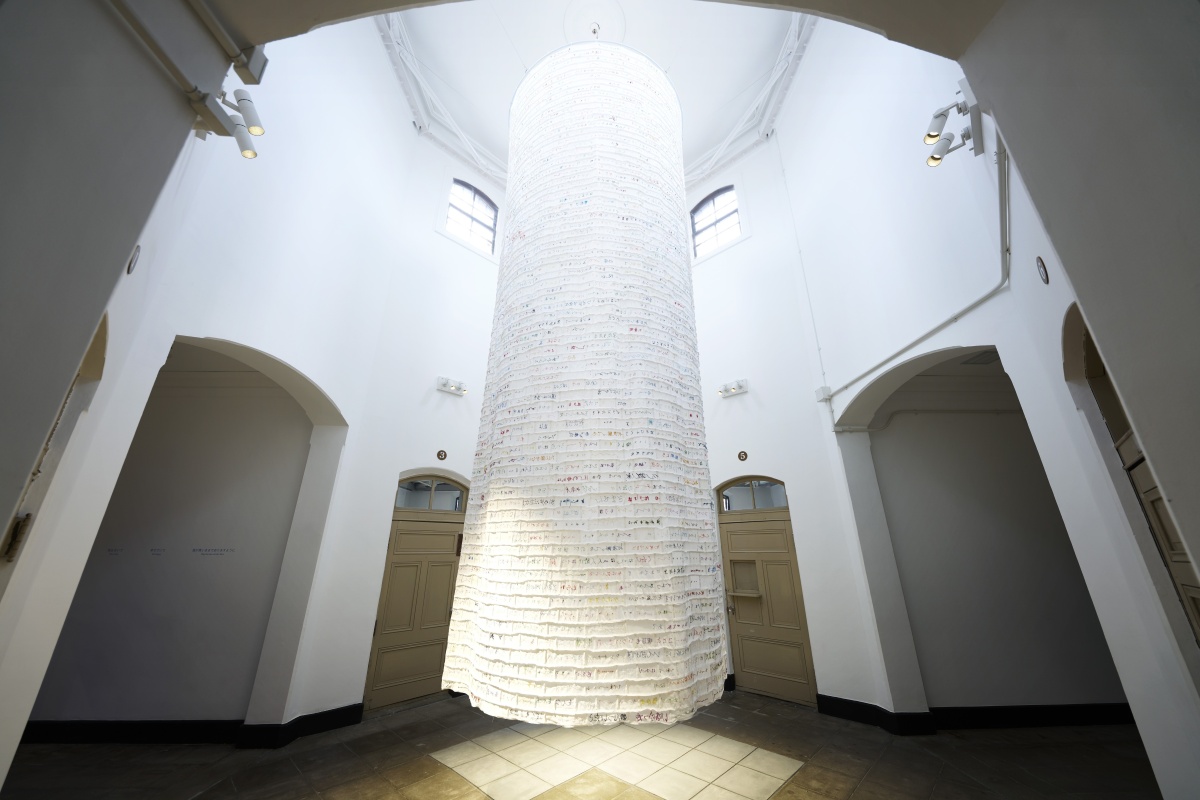
Building C, the former infirmary, answers Building B’s question through art rather than explanation. Its centrepiece, Sewing Voices, is a piece made of poems written by former inmates of the old Nara Juvenile Prison, embroidered onto brick-sized pieces of cloth by more than 200 local volunteers. Alongside it is work by artists currently incarcerated elsewhere in Japan, shared through a partner programme called Prison Arts Connections, with a space for visitors to write messages back to them. The exhibition closes in the Musubi Room, home to the Prison Postcard Project, where visitors write a postcard, either to one of the artists or to someone in their own life.
Then there’s the cafe and shop, which is where the museum lightens up, selling more standard museum merchandise alongside the signature order, the Red Brick Curry Bread, a panko-crumbed, curry-filled loaf shaped like one of the building’s own bricks. Next to the shop is a small gallery of Prison Work Products, genuine crafts made by inmates through Japan’s nationwide prison industry programme, sourced from prisons still operating elsewhere in the country.
Planning Your Visit
Book ahead rather than turning up on spec. The museum runs on a timed-entry system, and once a time slot is full, no more tickets are sold for it, same-day or otherwise. Given how much attention this opening has had, that’s a real risk, not just a formality.
Allow 1.5 to 2 hours to see everything properly. There’s no time limit once you’re inside, so you can move at your own pace, just make sure you’re through the door with enough of that window left before closing.
There are no fixed closing days, though the museum can close temporarily for maintenance, so it’s worth checking before you finalise a specific date. And since part of the site is outdoors without cover, it’s worth packing something for rain regardless of the season.
- Address: 18 Hannyaji-cho, Nara City, Nara Prefecture
- Hours: 9am to 5pm daily, last entry 4pm
- Access: approximately 18 minutes from Kintetsu Nara Station, or 25 minutes from JR Nara Station
- Accessibility: rental wheelchairs available on request, multipurpose restrooms on site, limited accessible parking nearby. Some areas of the building aren’t step-free given its age, but staff can guide an alternative barrier-free route.
.
Where This Fits on a Snow Holiday
Most Kiwi skiers flying to Japan land in one of two places: Tokyo, for Niseko or the Nagano resorts, or Osaka’s Kansai Airport, for the Kyoto, Osaka and Nara side of the trip. If you’re one of the growing number booking a multi-city itinerary, flying into Kansai and out of Tokyo (or the other way round), Nara Prison Museum has just become a genuinely good reason to slow down in Kansai rather than treat it as a one-night stopover.
Nara sits close enough to Kyoto and Osaka that it rarely gets more than half a day on most itineraries, usually just long enough for the deer and the Great Buddha. Adding the museum gives you a proper reason to stay longer, and it pairs naturally with a day in Kyoto’s temples and a night in Osaka for the food, before heading north to the snow.
Getting from Kansai to the mountains isn’t difficult, but it does take some route planning that’s easy to get wrong on your own. Hakuba is reachable by train via Nagoya and Nagano, running through some of the best scenery in the country. Niseko usually means a domestic flight north to Sapporo, and there’s a direct Osaka to New Chitose route that skips a Tokyo transfer altogether. Either way, working Nara into the front or back end of a Kansai gateway trip means you’re not adding a special detour, just making better use of days you’d otherwise spend deciding what to do with a spare afternoon in Nara.
It’s an only-in-Nara moment that has nothing to do with snow, and everything to do with making the days either side of it count.
If you’re weighing up a Japan snow holiday that starts or ends in Kansai, that’s exactly the kind of itinerary planning we do every day. Get in touch and we’ll help you work it in properly, done right, less stress and more stoke about the whole trip.