
Taking Kids to an Onsen in Japan: What Families Need to Know
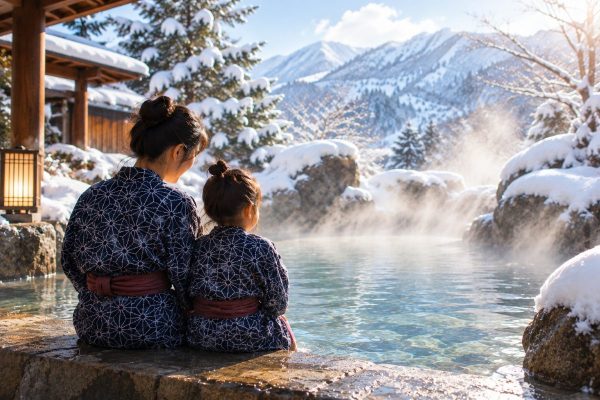
Soaking in an onsen after a day on the slopes is one of the best parts of a snow holiday in Japan, and it’s something families can enjoy together too. The rules are just a little different when children are involved.
There’s no national minimum age, and each bath sets its own rules. Babies and toddlers who still wear nappies can’t use the shared baths, children can often bathe with a parent of the other sex while they’re young, and private family baths make the whole thing easier.
This guide covers the etiquette, who kids can bathe with, where families can soak together, and how to introduce children to their first onsen.
Can Kids Go in an Onsen in Japan?
Yes, children can go in an onsen, and most places are used to welcoming families. There’s no national minimum age, so each bath sets its own rules, which are usually posted at the entrance or explained by staff when you arrive.
The biggest dividing line is nappies. Japan Guide says children who still wear nappies shouldn’t enter the baths, and shared baths generally keep out children who aren’t toilet trained yet, for hygiene reasons. In practice, babies and toddlers usually use a private bath rather than the shared one, which we cover below. Children who are toilet trained can generally join the shared baths with a parent.
Health matters too. Japan’s Ministry of the Environment says not to bathe in an onsen when you have a fever or are unwell, and the same goes for children. Onsen water is hot, and it can tire out small bodies quickly, so keep soaks short, watch how your child is feeling, and ask your doctor if you’re unsure about bathing a baby.
What Onsen Etiquette Do Families Need to Know?
The basics are the same for everyone, and our guide to Japanese onsen etiquette covers them. Shower first, go in without clothes, keep towels out of the water and tie long hair up. With children, a few of those need a little more attention.
Wearing a swimsuit isn’t the norm. Full nudity is expected in the vast majority of onsen, and a few spa-style complexes built for swimwear are the main exception. If you or your children would be more comfortable covered, the best option is a private onsen booked through your ryokan, the same advice we give for anyone with tattoos they can’t cover.
Wash your child properly before they get in. That’s the rule that matters most, and it’s why the washing area is set up with stools, buckets and showers. Sit them down and wash them first, including their hair if it’s likely to touch the water.
Keep the soak calm. Onsen are places to relax, so running, splashing and swimming aren’t done, and neither is shouting across the bath. It’s easiest to explain this before you go in, as a quiet place where everyone soaks and rests.
Stay close, too. Wet floors are slippery and the water is hot, so keep young children within arm’s reach and don’t leave them alone in the bath. Many families bring a small towel for each child to wrap up in afterwards.
Who Can Kids Bathe With at an Onsen?
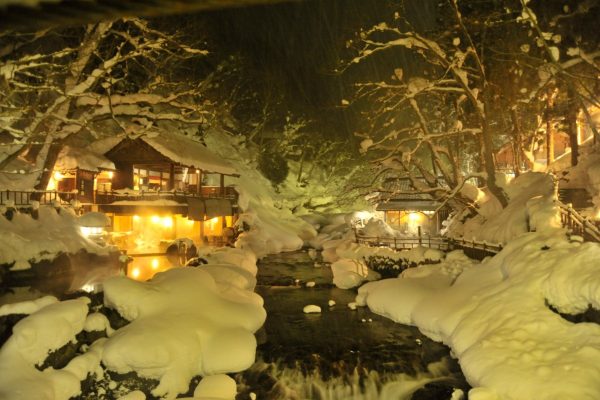
Can a dad take his daughter into the onsen, or a mum her son? Usually yes, while the child is young. Most places allow children aged 6 and under to go into the bath with a parent of the other sex, but the cut-off varies, so check before you go.
The limit has been tightening. Hotel policies commonly draw the line at around 6 or 7, and Japanese news reports show some bathhouses and regions lowering it in recent years. According to those reports, the age at which children are barred from the opposite sex’s bath in Hokkaido, home to Niseko and Furano, dropped from 10 to 7 in April 2023. Some places still allow slightly older children, so the rules posted at the entrance, or a quick question at the front desk, are the ones that count.
Once children are older, the usual answer is to split up. Mums go with daughters and dads with sons, and each child uses the bath of their own sex. Same-sex siblings can bathe together with the parent of the same sex.
Families with a mix of boys and girls, or with a child who’s too young to be left in the bath alone, have another option: a private bath, where you book it for your own family and everyone goes in together. We cover those in the next section.
Where Can Families Bathe Together?
The easiest answer for most families is a private bath, so it’s worth knowing what to look for.
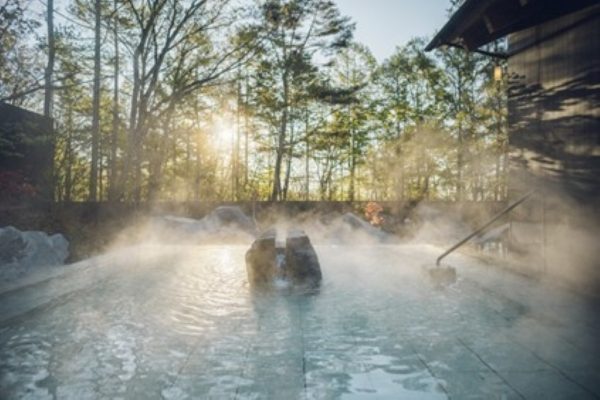
A private bath, called a kashikiri-buro or kazoku-buro, which means “family bath”, is a hot spring bath you reserve for your own group. You book a slot, usually 45 to 60 minutes, and for that time the water is only yours. Everyone can go in together, there’s no need to separate by sex, and nobody needs to worry about being seen. Many ryokans offer these, and some include them for staying guests.
An in-room bath is even simpler. Some ryokans have rooms with their own open-air or indoor onsen, so the family can soak whenever they like. At KAI Miyajima, for example, more than half of the 54 rooms have a private open-air onsen, which is exactly the setup that suits a family with young children.
Foot baths are a gentle way for small children to try the idea. Many onsen towns have them, so the whole family can sit on the edge with their feet in warm water without anyone getting undressed.
How Do You Introduce Kids to an Onsen?
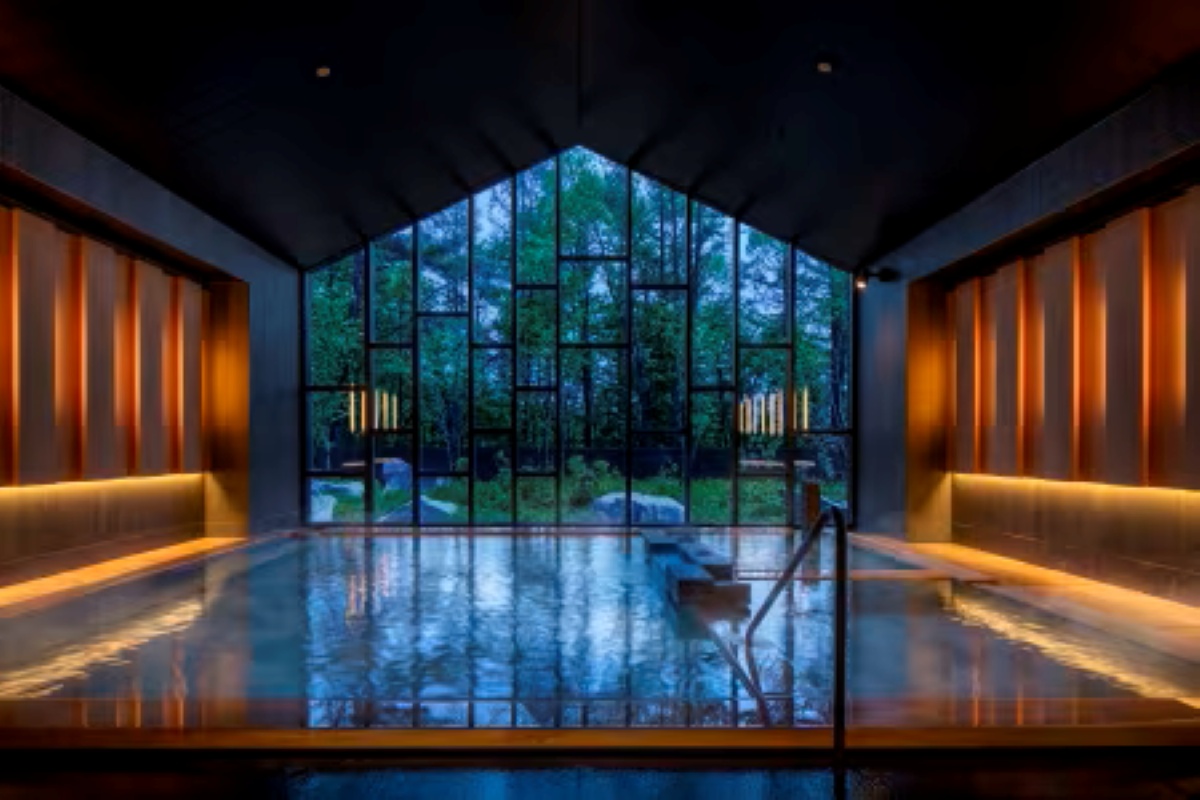
Start small. A foot bath is the gentlest way in, and a private or in-room bath is the next step, because there’s no one else around and you can go at your child’s pace.
Explain it beforehand. Tell them it’s a quiet place where everyone washes first, then soaks and rests. Nudity is completely normal at an onsen, but some children, especially older ones, feel shy about it. A private bath removes that worry, and it’s worth having that option ready.
Keep the first soak short. Onsen water usually feels hotter than a bath at home, and small bodies warm up quickly. Let your child sit on the edge with their legs in the water if they’d rather, and get out if they look flushed, tired or unhappy. Some onsen have a lukewarm tub, called a nuru-yu, next to a hot one, an atsu-yu. If there is one, the cooler tub is a gentler place to start, and children can take it at their own pace.
Have water ready. Bring a drink for each child and offer it before and after the bath, then give them time to cool down and rest before getting dressed.
Make it part of the day. After a morning on the slopes, a warm soak and a hot meal is one of the best parts of a snow holiday, and children often start asking for it. If a child is unwell, or just not keen, leave it for another day. Onsen should feel like a treat.
Which Ski Towns Suit an Onsen With Kids?
Almost every Japanese ski town has onsen, but some suit families better than others.
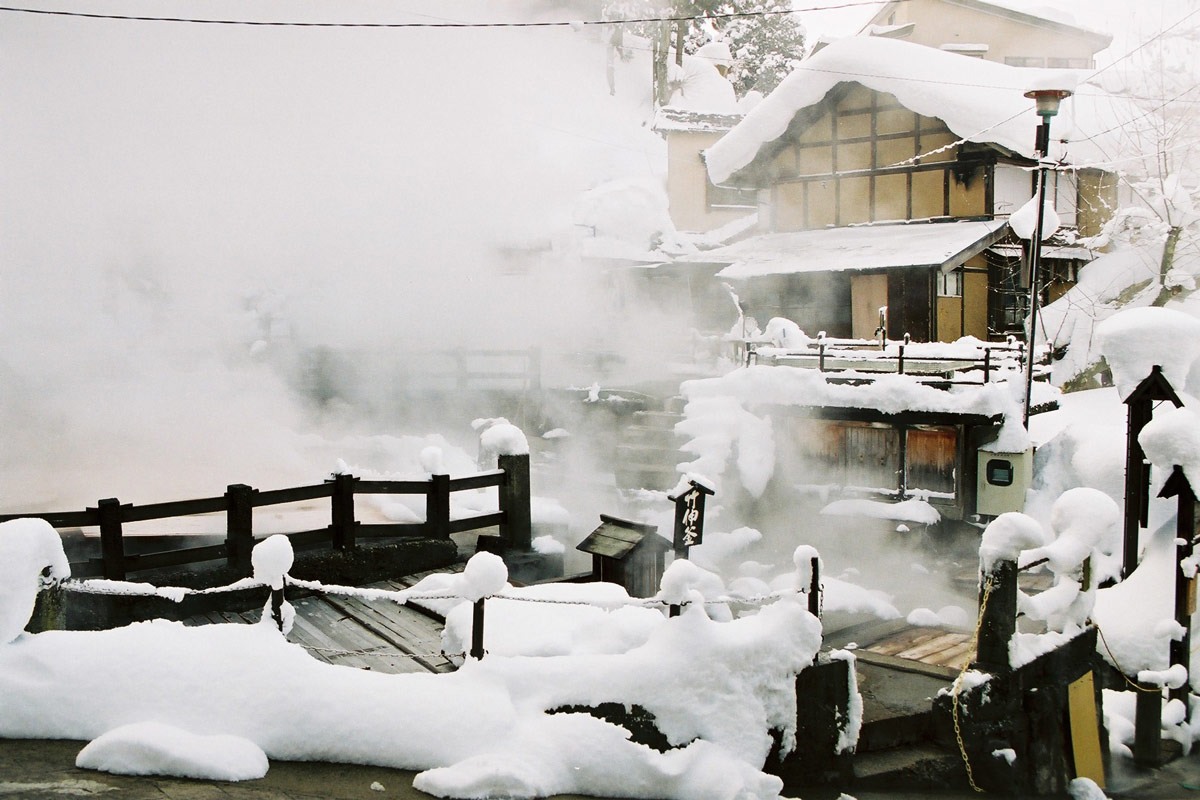
Nozawa Onsen is a ski resort and a hot spring village in one, with 13 public bathhouses around the town, and our Nozawa Onsen Stamp Trail guide covers them. The resort’s own website says the water is typically 45 to 49°C, and warns that it can be a challenge for first-timers. Temperatures vary from bath to bath, so the public baths can be very hot for young children. Families usually do better with a private bath at their accommodation, and the public baths are a good experience for older children.
Appi Kogen puts a large outdoor hot spring complex right beside the lifts, with a ski-in, ski-out hotel next to it, so a soak after skiing doesn’t mean going far. It suits families who want to warm up quickly and get the children to bed.
Hakuba has onsen too, including Happo Onsen and Tsugaike Kogen Onsen, which we cover in our Slopes & Springs guide.
If you’d like an onsen town to add to a snow trip, Kusatsu has more public and private bathhouses than almost anywhere else in Japan, and our KAI Kusatsu piece covers what staying there is like.
Whichever town you choose, we can help you pick accommodation with a private or in-room bath, so the whole family can soak together.
Quick Questions Answered
Can a dad take his daughter into the men’s bath? Usually yes, while she’s young. Most places allow children aged 6 and under to go in with a parent of the other sex, but the cut-off varies, so check the rules at the entrance or ask at the front desk.
Can a mum take her son into the women’s bath? The same rule applies. Young boys can usually go in with their mum, with the limit commonly around 6 or 7, though it varies from bath to bath.
Can babies and toddlers go in an onsen? Children who still wear nappies can’t use the shared baths, so a private or in-room bath is the usual answer. If you’re unsure about bathing a baby, ask your doctor.
Do children have to be naked in an onsen? In nearly all onsen, yes, as swimsuits are generally not allowed. If you or your children would prefer to be covered, a private bath is the best option.
Can kids go in an onsen if they’re unwell? No. Japan’s Ministry of the Environment says not to bathe in an onsen when you have a fever or are unwell, and the same goes for children.
Let AMPED Build Your Family Onsen Trip
If you’re taking young children, we’d start with a private or in-room bath. It removes the nappy rules, the age cut-offs and the worry about being seen, and lets the whole family soak together at their own pace.
That’s the kind of detail we build in when we plan your trip. We’ll find accommodation with the right kind of bath for your family, whichever Japanese snow town you choose.
Start planning your family snow holiday in Japan with AMPED and we’ll take care of the rest.