
Skis for Japan: Should You Rent or Bring Your Own?
The skis that suit New Zealand snow often aren’t wide enough for Japan’s deep powder, and that changes the question of whether to bring your own gear or rent when you get there.
The short answer: most skis need to be at least 100 mm underfoot to float in Japan, and 110 to 120 mm for deep powder days. Many New Zealanders rent skis there and bring their own boots. AMPED can pre-book your rental, so it’s waiting when you arrive.
This guide covers what to look for in skis and boards, the pros and cons of renting and bringing your own, and how to get your gear around Japan, including the trains.
Why Do You Need Wider Skis in Japan?
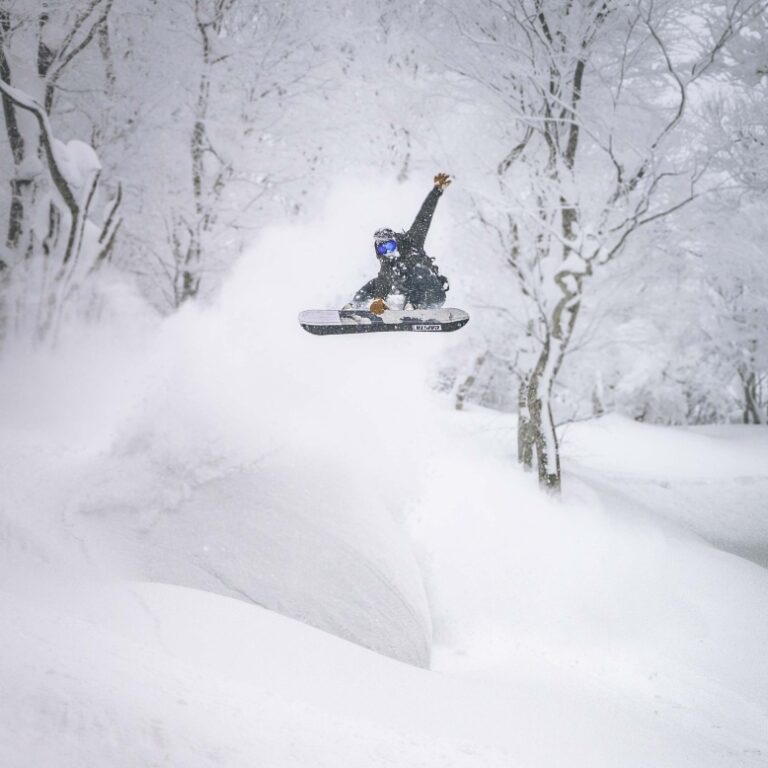
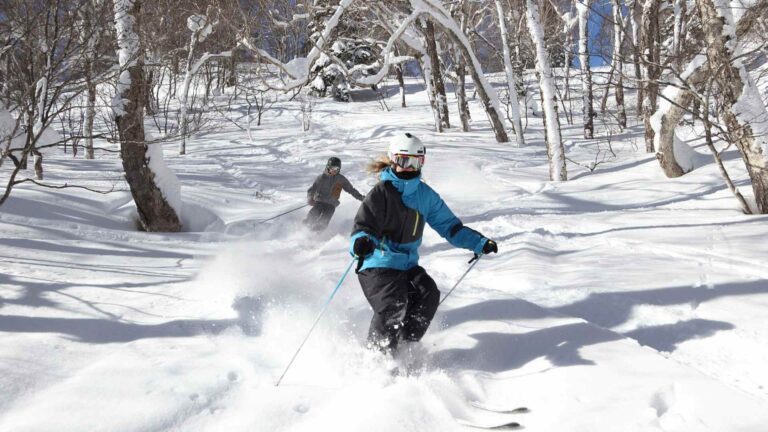
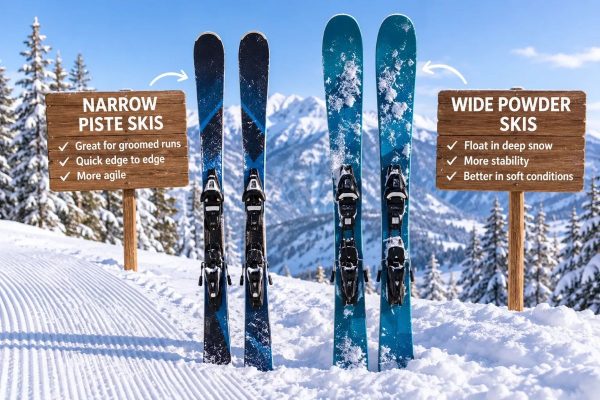
Japan is known for deep, light powder, and the width of your skis decides how you ride it. The waist, or width underfoot, is what keeps you on top of the snow. A narrow, piste-focused ski tends to sink, which makes deep days tiring.
The width most commonly recommended depends on how you ski:
- For all-round skiing, about 85 to 100 mm suits most people who mix groomed runs with some powder.
- To float in powder, at least 100 mm underfoot is a common minimum, with 110 to 120 mm the usual range for deep days.
- For the deepest conditions, some guides suggest going wider than 120 mm.
One New Zealand retailer puts it plainly: you can ski shallow powder on narrower skis, but to float you need a waist wider than 95 to 100 mm.
For snowboarders, the advice is a directional board with a setback stance and a slightly wider waist. Volume-shifted powder boards often ride shorter than your usual size. You can rent or demo powder boards at many Japanese resorts, so you don’t have to own one.
Most people don’t own skis this wide, which is where renting comes in.
What Are the Pros and Cons of Renting Your Gear in Japan?
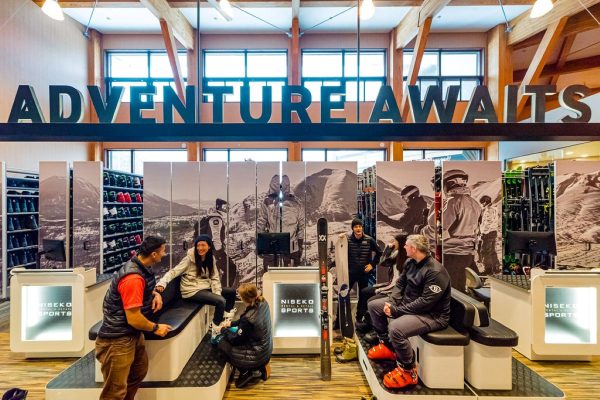
The pros. The biggest is that you get the right gear for the snow. Instead of hoping your skis cope with deep powder, you rent wider skis or a powder board built for it. You also skip the baggage. There’s no ski bag to carry, no overweight charges, no risk of damage and nothing to manage on Japan’s trains. Renting suits short ski stays especially well. If you’re only on the snow for two to five days, you pay for just the days you use, and avoid carrying gear around for a whole trip. Rental typically costs about $55 to $75 NZD per person per day, depending on the equipment you choose. And AMPED can pre-book your skis or snowboard and most extra gear, so everything is waiting when you arrive.
The cons. The main one is unfamiliar gear, especially boots. A pair you’ve worn in and know won’t hurt on day three is hard to replace with a rental. Stock and sizing vary, and larger boots are worth reserving early, which is one more reason to pre-book. A few extras can only be bought in resort, and on a longer trip, renting day after day adds up compared with gear you already own.
What Are the Pros and Cons of Bringing Your Own Gear to Japan?
The pros. Your own gear is familiar. You know how it feels and how the boots fit, which counts for experienced skiers and riders. Flying with it is also straightforward. Air New Zealand counts sporting items under 2 metres and up to 23 kg as a standard checked bag, and a ski bag can hold your boots and poles too, though what’s included depends on your fare.
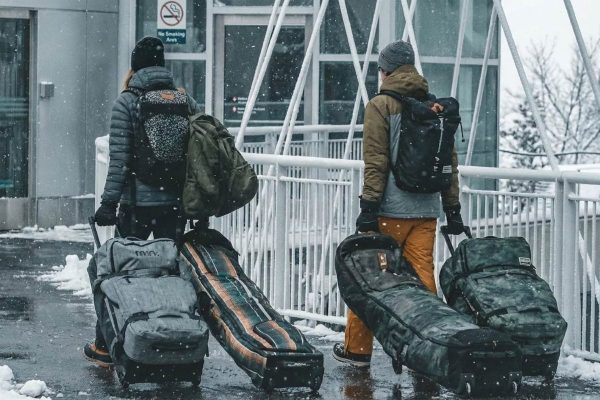
The cons. The trouble starts once you land, and the trains are the main reason. Japan’s rail companies require you to reserve a seat with an oversized baggage area for any baggage over 160 cm in overall dimensions, and a ski or snowboard bag will usually be longer than that on its own. So you’re carrying a suitcase and a ski bag through busy stations, up and down stairs, between lines and onto crowded platforms, and then booking a special seat on the Shinkansen. It’s hard enough on a long-haul morning, and harder if you’ve got children or a few days in Tokyo before the snow.
The length of your ski time matters too. Many trips include several days in cities and only two to five days on the snow. For a short stay like that, it’s rarely worth the hassle of flying and moving your own gear, because you’d carry it the whole trip for just a few days of use.
Then there’s the gear itself. A risk of damage in transit, overweight charges if the bag is heavy, and skis that may not be wide enough for deep powder all count against bringing your own.
How Does Yamato Luggage Forwarding Work?
If you do bring your own gear, Yamato’s Black Cat luggage forwarding takes most of the pain out of the trip. Instead of carrying everything through Tokyo, you send your luggage and your skis or board ahead to your resort, and they’re waiting at reception when you arrive.
That means you can spend a couple of days in Tokyo with just a day bag, then take the train to the snow with nothing to carry. There’s no ski bag to manage on the subway, no oversized baggage seat to reserve on the Shinkansen, and no wrestling bags through stations.
It works simply. You drop your bags at a Yamato counter at the airport, or your hotel can arrange a pickup, and choose the date you want them at the resort. Allow at least two to three days. Collect them from reception when you arrive, and use the same service to send them back at the end of your stay. We can arrange the forwarding for you, so it’s organised before you travel.
For the size limits, the return option and how to pack your bag, see our guide to shipping your ski bag with Yamato.
Is There a Middle Ground Between Renting and Bringing Your Own?
Yes, and it’s a popular one. A lot of travellers bring their own boots and rent the skis or board.
Boots are where fit matters most, and a pair that’s comfortable on the first day makes a big difference over a week. They’re also the easiest part of your gear to carry. You then rent wide powder skis or a powder board to suit Japan’s snow, without the weight of a full set. If you’d rather not rent boots at all, this is the simplest way to avoid it.
Let AMPED Arrange Your Gear Your Way
Whether you want to take your own skis, meet in the middle and bring just your boots, or rent the whole package, it’s your call, and we’ll arrange the trip around it. If you’re renting, we’ll pre-book your skis or snowboard and most extra gear, so it’s waiting at the resort when you arrive. If you’re bringing your own, we can forward your luggage and ski bag with Yamato, so you can spend a few days in Tokyo before the snow with nothing to carry.
Get in touch with the AMPED team and tell us how you’d like to travel, and we’ll take care of the rest.